
Striated Abutilon
Callianthe striata (Dicks. ex Lindl.) Donnell
Description
Growing requirements
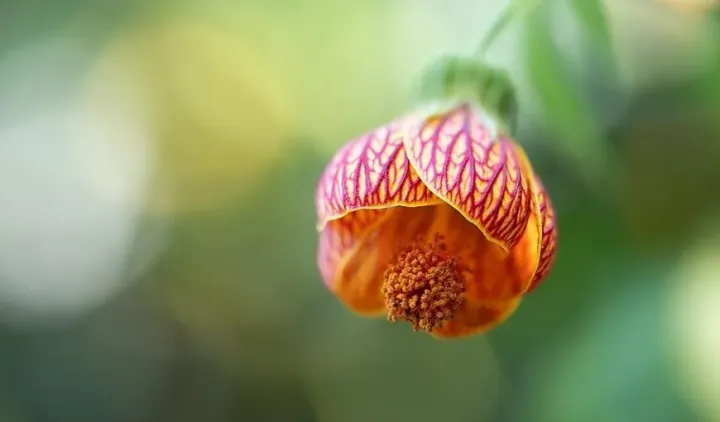
Striated Abutilon (Callianthe striata) is a member of the Malvaceae family. This woody shrub is native to Brazil and surrounding South American regions, where it thrives in humid tropical forest edges.
The species requires bright, indirect sunlight for optimal growth. High light intensity ensures the development of its signature foliage patterns, while intense direct sun may scorch the leaves and dehydrate the plant.
Soil requirements focus on high organic content and excellent drainage. A mix of peat moss, coarse sand, and compost provides the necessary structure to keep roots healthy while retaining sufficient moisture.
Temperature management is critical for this species. It prefers stable conditions between 20°C and 25°C, with minimal fluctuations. If kept outdoors, it must be protected from temperatures below 10°C.
Horticultural practice involves regular pruning in early spring to maintain a dense, bushy habit. Pinching back the tips of young branches encourages more flowering sites, increasing the overall aesthetic output.
Main diseases and pests
Common pests affecting Callianthe striata include spider mites, aphids, and whiteflies. These insects frequently colonize the underside of the leaves, especially in environments with poor ventilation.
Fungal issues, such as root rot, often arise from waterlogged substrates. Using pots with drainage holes and choosing a light, porous soil mix significantly reduces the likelihood of these pathogens.
Powdery mildew may occur during periods of high humidity and cool air. Preventive measures include maintaining a proper distance between plants and avoiding water accumulation on foliage.
Control strategies for infestations involve both biological and chemical approaches. Neem oil or insecticidal soaps are effective for early-stage pest management without damaging the plant tissues.
Integrated pest management, combining physical inspection and timely treatment, ensures the long-term viability of the crop in both greenhouse and home environments.