
Faujasia salicifolia
Faujasia salicifolia
Description
Growing requirements
Faujasia salicifolia is a shrubby member of the Asteraceae family, uniquely endemic to the high-altitude regions of Reunion Island. Its natural habitat is characterized by moist, volcanic environments where the plant has adapted to survive in cool, misty, and stable climatic conditions.
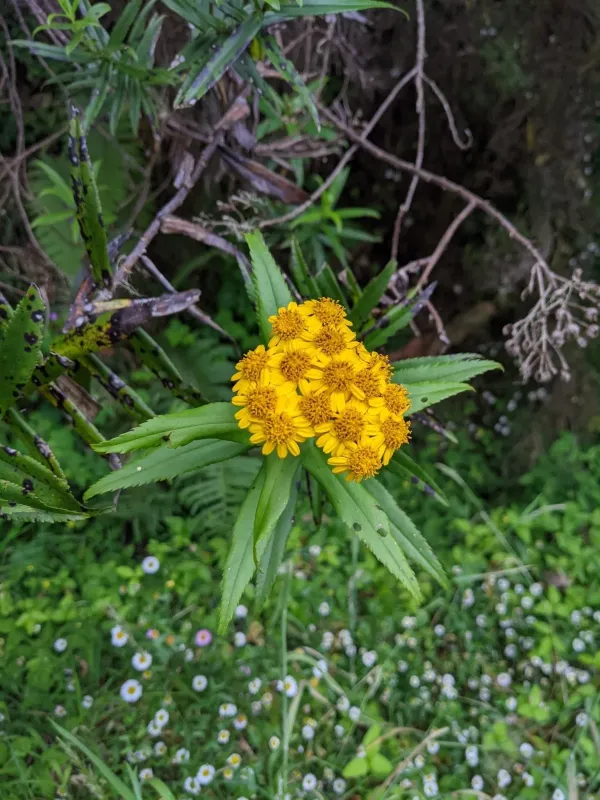
The botanical identity of this plant is defined by its willow-like foliage, which provides structural elegance and specialized photosynthetic efficiency. As an endemic species, it represents a significant segment of the local biodiversity, evolving in isolation from continental pressures.
In terms of cultivation requirements, the species demands a high degree of atmospheric humidity and moderate temperatures. Growers must prioritize excellent drainage to mimic the volcanic soils of its native habitat, ensuring that the root system remains well-oxygenated while constantly hydrated.
The plant thrives in semi-shaded to light-exposed environments, avoiding intense, direct heat which can cause stress to its foliage. Proper soil management is critical; using acidic to neutral substrates enriched with volcanic pumice is recommended to maintain the vigor of the plant.
Currently, the use of Faujasia salicifolia is primarily confined to botanical research, conservation initiatives, and ornamental horticulture for rare plant collections. It is not considered a commercial agricultural crop, but it remains a subject of great interest for plant physiology studies.