
Fallugia paradoxa
Fallugia paradoxa
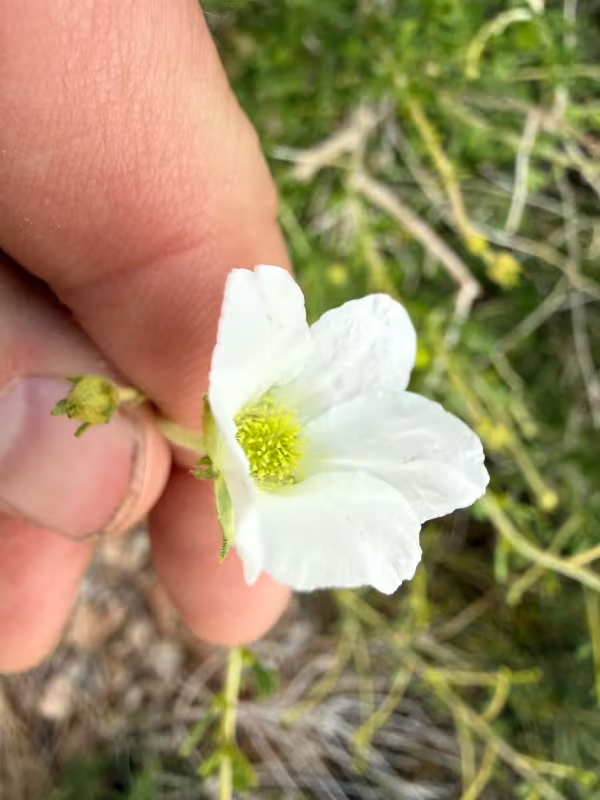
Description
Sowing dates
Propagation of Fallugia paradoxa is primarily achieved through seeds or stem cuttings. For best results, sow seeds outdoors in late fall, allowing them to undergo natural stratification during the winter months.
Spring sowing requires cold stratification for 30 to 60 days before planting. Seeds should be sown at a shallow depth of approximately 0.5 to 1 centimeter in well-draining potting mix.
Stem cuttings should be taken in the summer using semi-hardwood growth. Maintain high humidity and consistent temperatures in a propagation frame or greenhouse to encourage root development.
Seedlings exhibit slow initial growth during their first season. It is crucial to monitor moisture levels carefully, as young plants are susceptible to both drought stress and root rot during the germination phase.
Transplanting into the garden should be planned for the spring season. Ensure the root ball remains intact during the process to minimize transplant shock and promote rapid establishment.
Growing requirements
Fallugia paradoxa, commonly known as Apache plume, is a member of the Rosaceae family. It is native to the arid environments of the Southwestern United States and Northern Mexico, thriving in harsh conditions.
The plant demands full sun exposure to flourish and maintain its structural integrity. Insufficient sunlight will cause the shrub to become leggy and significantly reduce its ornamental flowering display.
Well-draining, rocky, or sandy soils are ideal for this species. It is highly intolerant of waterlogged conditions, which frequently cause root decay and subsequent plant mortality in heavy soil types.
The species is exceptionally drought-tolerant once established, making it a perfect candidate for xeriscaping projects. It requires very little supplemental water, surviving on natural precipitation in most climates.
General maintenance is minimal, requiring only occasional pruning to remove dead wood or to shape the shrub. Fertilization is generally unnecessary and should be avoided to preserve its natural form and resilience.
Main diseases and pests
Fallugia paradoxa is remarkably robust and experiences few serious health issues in proper environments. The most significant threat is improper irrigation, which leads to fungal pathogens attacking the root system.
Root rot is the primary clinical concern, typically caused by poor soil drainage. Planting in raised beds or on sloped terrain is an effective preventative strategy against water accumulation.
Aphids can occasionally infest tender new growth during warm spring weather. Control is usually unnecessary unless the infestation is heavy, in which case horticultural soap sprays are effective.
Powdery mildew may develop if the plant is grown in areas with high humidity and limited airflow. Proper spacing between individual plants ensures adequate ventilation and disease prevention.
Leaf-chewing insects can sporadically damage foliage, but these pests rarely threaten the life of the plant. Routine inspection of the leaves during the summer months is sufficient for management.