
Euterpe edulis
Euterpe edulis Mart.
Description
Growing requirements
Euterpe edulis, commonly known as the Juçara palm, is a perennial plant belonging to the Arecaceae family. Native to the Atlantic Forest of South America, this species is highly valued for its ecological role and its economic significance in tropical agriculture.
The crop thrives in humid, tropical climates with consistent temperatures between 20°C and 30°C. It is intolerant to frost and cold winds, making it strictly suitable for cultivation in frost-free regions where the climate remains stable throughout the year.
Soil requirements are quite specific: Euterpe edulis prefers deep, fertile, and well-drained soils rich in organic matter. While it requires high moisture levels to grow, stagnant water must be avoided to prevent root diseases and ensure healthy development.
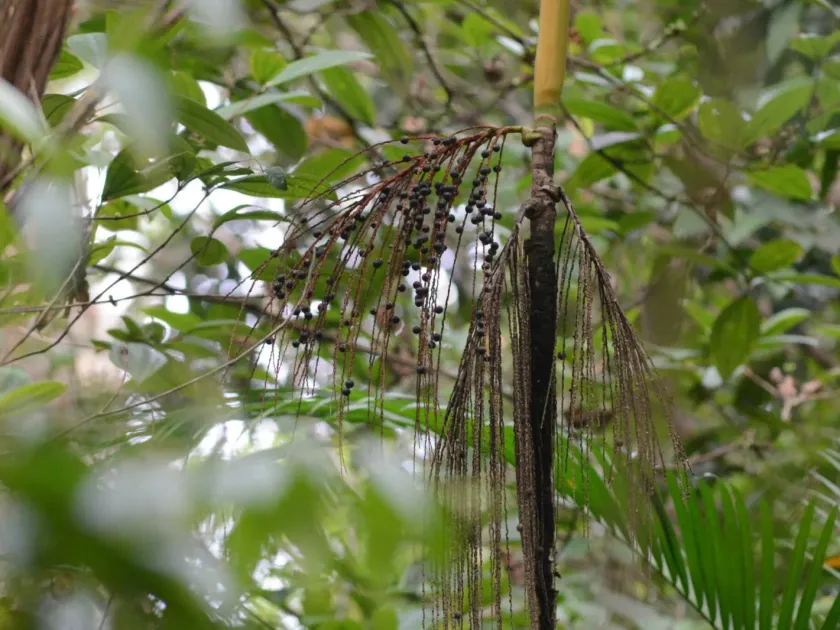
Botanically, it is a single-stemmed, slender palm that can reach heights of up to 20 meters. The plant features large, pinnate leaves and a smooth, ringed trunk. It is often cultivated as a decorative element as well as for its productive harvest of palm hearts.
Agricultural management includes ensuring adequate irrigation and applying organic fertilizers to maintain soil fertility. Younger palms require partial shade to protect them from excessive direct solar radiation, which can dehydrate the plant in its early stages.
Yield
The primary economic value of Euterpe edulis comes from its heart of palm (palmito), which is the tender core of the crown shaft. It is considered a culinary delicacy due to its delicate, nutty flavor and soft texture, which is highly sought after globally.
Beyond the heart of palm, the plant produces edible fruits, often referred to as açaí or juçara berries. These fruits are rich in antioxidants and essential fatty acids, making them an important component of the modern superfood market.
Yields are typically managed by density-based planting systems. Since the harvest of the heart of palm results in the death of the tree, farmers must plan for continuous replanting cycles to maintain a consistent output of the product year after year.
Fruit production usually begins once the palm reaches a certain maturity, typically between 4 to 8 years. A healthy palm can produce multiple bunches per season, provided that soil moisture and nutrient availability are effectively managed by the farmer.
In addition to food products, parts of the palm can be utilized for handicraft production, including leaf fibers and trunk sections for decorative purposes, providing supplementary income for small-scale growers in the Atlantic Forest regions.
Main diseases and pests
Fungal root rot is a major threat to the cultivation of Euterpe edulis, especially in areas with poor drainage. Proper site selection and land preparation are critical to minimize the risk of soil-borne pathogens attacking the root system.
The palm weevil is a significant insect pest that can devastate plantations. By boring into the soft tissue of the trunk, these insects can weaken the structural integrity of the palm, leading to total plant failure if left untreated by manual control or bio-pesticides.
Leaf-eating insects often target the crown of the palm during periods of rapid growth. Consistent monitoring and the use of integrated pest management practices are essential to prevent severe defoliation that could hamper the palm's overall vigor.
Weed competition is particularly detrimental during the first two years of a palm's life. Providing regular manual weeding and applying organic mulch around the base of the stem helps suppress weed growth while simultaneously conserving soil moisture.
Nutrient imbalances, particularly deficiencies in magnesium or iron, can manifest as leaf chlorosis. If left uncorrected, these deficiencies weaken the plant, making it more susceptible to environmental stress and decreasing its fruit or heart of palm yields.
Harvesting
Harvesting the fruit requires careful timing to ensure that berries are at peak maturity. Since the fruit is highly perishable, it must be collected by hand and transported to processing facilities immediately to maintain freshness and prevent nutrient oxidation.
For the heart of palm harvest, the tree is felled once it reaches technical maturity. Skilled workers must use precision tools to remove the leaves and outer layers, exposing the succulent inner core which is the primary marketable product.
Post-harvest processing involves cleaning the hearts of palm and preparing them for canning or vacuum packing. Strict hygiene standards are required during this phase to ensure that the final product meets international quality and safety regulations.
Sustainable harvesting strategies involve replanting the harvested areas immediately. By staggering the planting dates across different plots, the farmer ensures that there is always a batch of mature palms ready for harvest throughout the growing season.
Effective logistic management is vital for the success of Euterpe edulis farms. By shortening the time between harvest and processing, growers ensure that the high-value berries and hearts of palm retain their premium quality for the consumer market.