
Webster's Mallee subspecies norsemanica
Eucalyptus websteriana Maiden subsp. norsemanica L. A. S. Johnson & K. D. Hill
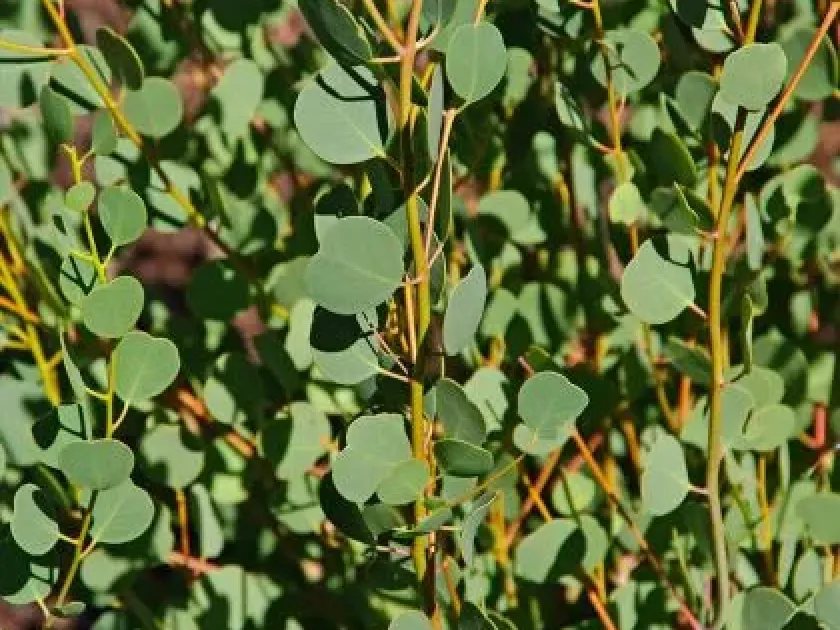
Description
Growing requirements
Webster's Mallee subspecies norsemanica (Eucalyptus websteriana subsp. norsemanica) is a distinctive species within the Myrtaceae family. It is native to Western Australia, specifically found in the rocky and arid landscapes near the Norseman region, which dictates its high environmental resilience.
The plant thrives in Mediterranean-to-arid climates characterized by long, hot summers and mild, dry winters. Its botanical architecture is that of a mallee-form tree, which typically develops multiple stems rising from a lignotuber, providing an evolutionary advantage for survival in wildfire-prone regions.
Cultivation requires full sun exposure and well-drained, gritty or sandy soils. In agricultural settings, it is essential to replicate its natural rocky habitat to prevent root compaction and ensure proper aeration of the root system, which is critical for long-term health.
Watering requirements are very low once the plant is established. During the initial growth phase, deep watering is necessary to encourage deep root penetration, but excessive irrigation should be strictly avoided to prevent the onset of physiological disorders.
The species serves primarily as an ornamental specimen in xeriscaping or as a research subject in botanical studies of arid-zone vegetation. It is highly valued for its silvery foliage and the unique visual texture it provides to dry-landscape designs.
Main diseases and pests
The species is primarily susceptible to common eucalyptus pests such as psyllids and leaf-eating beetles. Pathological risks are mostly limited to fungal root rots, which occur almost exclusively in poorly drained or waterlogged soils, hindering the plant's natural resistance.