
Eucalyptus dorrigoensis
Eucalyptus dorrigoensis (Blakely) L. A. S. Johnson & K. D. Hill
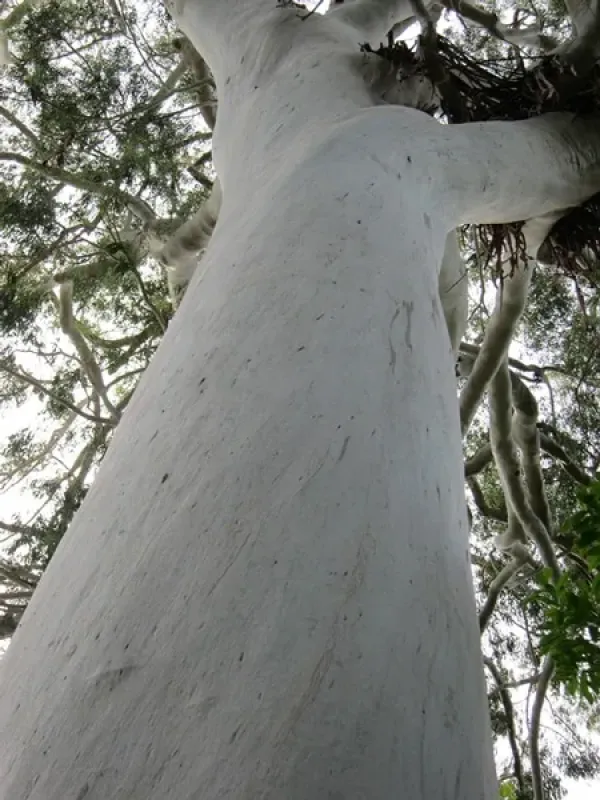
Description
Sowing dates
Propagation of Eucalyptus dorrigoensis is typically conducted in controlled nursery environments. Seeds are sown in early spring to leverage the increasing day length.
The growing medium must be porous and well-drained to prevent damping-off diseases during the sensitive germination phase. Seeds are placed on the surface and covered lightly.
A consistent temperature range of 20 to 25 degrees Celsius is ideal for uniform germination. Maintaining high humidity levels in the germination chamber is essential for success.
Seedlings are transplanted into individual pots once they develop their first set of true leaves, allowing for strong root development prior to field planting.
Hardening off the saplings before outplanting is a standard procedure to ensure that the trees can withstand outdoor climatic conditions upon installation.
Growing requirements
As a member of the Myrtaceae family, Eucalyptus dorrigoensis thrives in full sun exposure. Adequate light is necessary for its characteristic rapid growth rate.
The species prefers deep, fertile, and well-drained soils. While it appreciates moisture, it is sensitive to waterlogged conditions, which can lead to root degradation.
Climatic requirements involve a preference for subtropical conditions with reliable rainfall. It is best suited to regions that avoid prolonged, severe frost events.
Wind protection is highly recommended for young trees to prevent snapping of the succulent terminal shoots during stormy weather conditions.
Soil nutrient levels should be managed through organic amendments to maintain the tree's health and ensure consistent annual growth rings in plantations.
Yield
Eucalyptus dorrigoensis is managed in plantations primarily for timber production. Its rapid biomass accumulation makes it an efficient species for forestry cycles.
The yield potential is influenced by planting density and site preparation. Proper thinning regimes help maintain optimal growth and individual tree quality.
Beyond timber, the foliage of this species can be harvested for the extraction of aromatic essential oils, providing an additional revenue stream for producers.
Sustainable harvesting practices involve long-term rotation cycles, where trees are allowed to mature sufficiently to provide high-quality structural wood.
Monitoring the growth rate through periodic inventory assessments allows land managers to predict yield more accurately throughout the tree's development cycle.
Main diseases and pests
Fungal leaf spots represent a common threat to this species, especially in environments characterized by high ambient humidity and poor air circulation.
Insect pests, including various beetles and defoliators, can significantly impact young stands, necessitating timely monitoring and appropriate biological control.
Root rot, often caused by Phytophthora species, is a serious risk in poorly drained soil environments, requiring proactive drainage management.
Boring insects represent a risk to mature timber quality, necessitating regular sanitation logging to prevent the spread of infestations across the plantation.
Implementing an integrated pest management program remains the most effective strategy for mitigating these threats and ensuring a healthy tree population.