
Eucalyptus cloeziana
Eucalyptus cloeziana F. Muell.
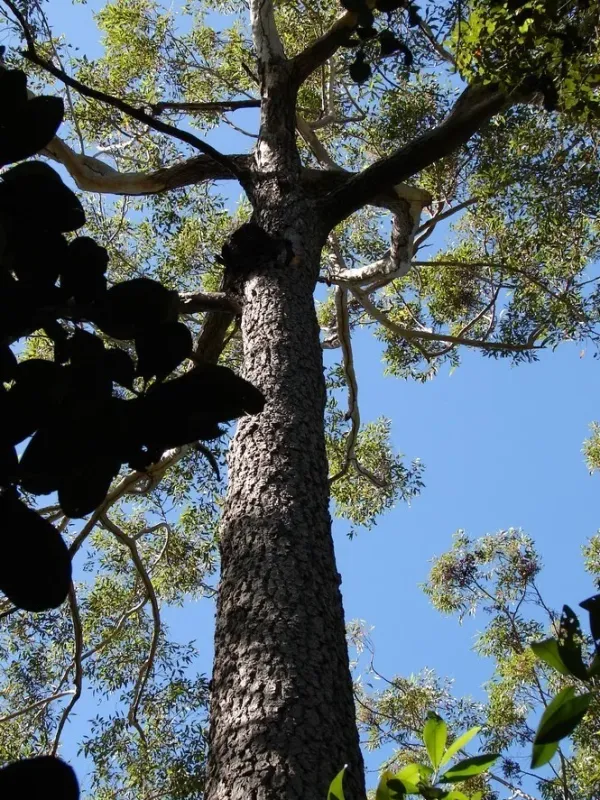
Description
Sowing dates
Eucalyptus cloeziana, belonging to the Myrtaceae family, is a fast-growing, evergreen tree highly valued for its commercial timber production potential.
Propagation is typically performed via seeds in professional nurseries to ensure high-quality, uniform saplings suitable for large-scale forest plantations.
The optimal planting time coincides with the start of the rainy season, which provides the necessary moisture for the establishment of the root system.
Planting density is adjusted based on specific management goals, typically ranging from 1,100 to 1,600 trees per hectare for efficient canopy closure.
Young trees require active management during their first two years, focusing on weed control and soil maintenance to promote vigorous early growth.
Growing requirements
The species thrives in tropical and subtropical climates, requiring annual rainfall between 800 and 1500 mm to sustain its rapid biomass accumulation.
It prefers deep, well-drained loamy soils and red earths that allow for extensive root penetration and prevent water stagnation at the subsurface level.
Sunlight exposure is crucial for this species; it is highly intolerant of shade and requires an open canopy to achieve maximum growth rates.
The ideal temperature range is between 18°C and 28°C, and the tree demonstrates moderate tolerance to brief dry spells once it is well-established.
Proper drainage is the most critical soil requirement, as the species is highly susceptible to root diseases under anaerobic, waterlogged conditions.
Yield
Renowned for its exceptional growth rate, Eucalyptus cloeziana is a premier choice for commercial plantations in suitable warm-climate regions.
Yield potentials on optimal sites can reach 20–30 cubic meters per hectare per year, making it a highly profitable investment for the forestry industry.
The timber is characterized by high density, strength, and natural durability, making it suitable for heavy construction, utility poles, and sleepers.
Beyond structural timber, the wood is also used for high-quality flooring and exterior cladding due to its aesthetic appeal and resistance to decay.
Harvest rotations are typically set between 15 and 25 years, depending on the site index and the specific size requirements of the timber products.
Main diseases and pests
Leaf-eating insects constitute the primary biological threat, as severe defoliation can significantly impede the photosynthetic capacity of the trees.
Pathogenic fungi, particularly Phytophthora species, represent a major risk to tree health, often manifesting as fatal root rot in poorly drained areas.
Local pest populations, including termites and wood-boring insects, may necessitate integrated pest management strategies to protect young plantations.
Silvicultural interventions, including thinning and sanitation harvesting, are recommended to maintain stand vigor and reduce the spread of pathogens.
- Fungal leaf diseases (e.g., leaf rust).
- Damage by wood-boring beetle species.
- Nutrient deficiencies in depleted forest soils.