
Sugar gum
Eucalyptus cladocalyx F. Muell.
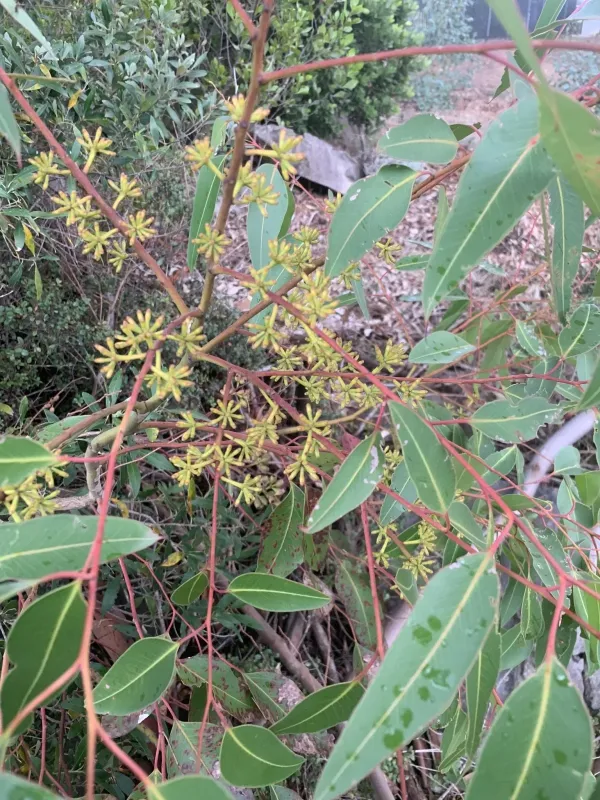
Description
Growing requirements
Eucalyptus cladocalyx, commonly known as sugar gum, is a member of the Myrtaceae family. This large evergreen tree can grow up to 35 meters in height and is characterized by its smooth, mottled bark that sheds annually, revealing beautiful light-colored patterns.
The species is native to South Australia and is naturally adapted to Mediterranean climates. It thrives in environments with warm, dry summers and mild winters, making it an excellent choice for reforestation in similar arid to semi-arid zones worldwide.
Regarding soil, it prefers well-drained loamy, sandy, or even limestone-rich substrates. It exhibits remarkable adaptability to various soil types but suffers significantly in waterlogged conditions, which restricts its growth and increases susceptibility to root diseases.
Full sun exposure is vital for the development of Eucalyptus cladocalyx. While it can withstand occasional light frost, it is not suited for severe cold, and its optimal growth zone remains within warm temperate or subtropical regions.
Agronomic management involves deep soil cultivation before planting to encourage root penetration. Young trees require careful weeding during the first two to three years to ensure they successfully establish themselves without competition for nutrients.
Yield
The primary economic use of sugar gum is the production of high-quality, durable timber. The wood is renowned for its hardness, density, and natural resistance to decay, making it a preferred material for heavy construction, utility poles, and fencing.
Beyond timber, Eucalyptus cladocalyx is widely utilized in large-scale shelterbelt planting. These trees act as effective windbreaks and help mitigate soil erosion, significantly improving the agricultural microclimate of surrounding farmlands.
Although less commonly exploited than other species, the leaves of Eucalyptus cladocalyx contain essential oils that have potential applications in the cosmetic and cleaning industries, offering a secondary product line for forest managers.
Rotation cycles for timber production typically range from 20 to 30 years. With proper silvicultural management, including pruning and thinning, plantation yields can be maximized to meet strict industrial quality standards for structural wood.
In recent years, the species has been investigated as a promising candidate for biomass energy production. Its fast growth rate and ability to adapt to marginal soils make it an attractive option for sustainable renewable energy plantations.
Main diseases and pests
The eucalyptus snout beetle (Gonipterus scutellatus) is a major pest that defoliates the trees, causing significant stress and growth reduction. Integrated pest management is necessary to control infestations in young plantations.
Phytophthora root rot (Phytophthora cinnamomi) remains the most severe pathological threat. Proper drainage and selecting disease-free nursery stock are the primary defenses against this pathogen, which can devastate entire stands.
Fungal leaf spot diseases may appear during periods of high humidity. While usually not lethal to mature trees, they can weaken younger specimens; thus, maintaining optimal spacing to encourage air circulation is a standard preventive measure.
Chemical intervention is generally limited to the nursery phase and early plantation years. Encouraging natural predators of eucalyptus pests is a preferred biological method to keep population levels of leaf-eating insects under control.
Fire risk is an inherent danger due to the presence of volatile oils in the foliage. Strict forest management practices, including the maintenance of firebreaks and the removal of dry underbrush, are essential to protect the plantation assets.