
River red gum
Eucalyptus camaldulensis Dehnh. x Eucalyptus globulus Labill.
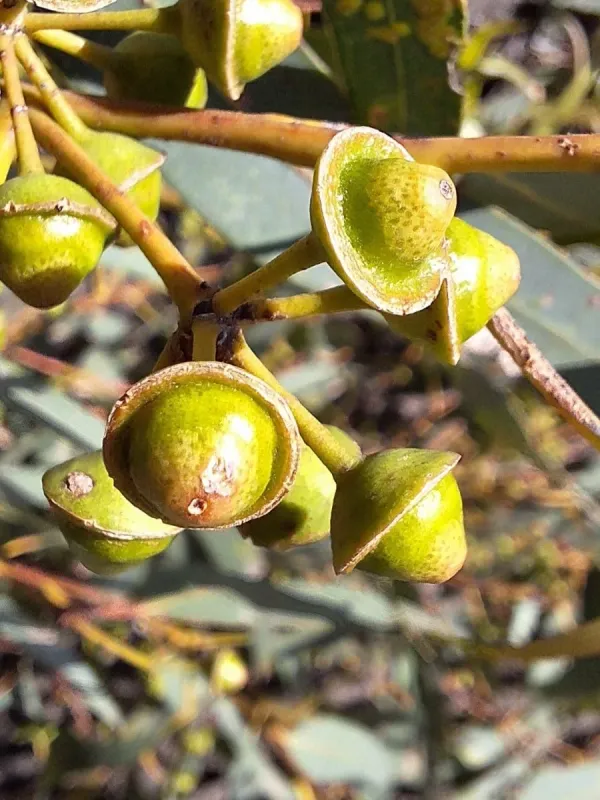
Description
Sowing dates
Cultivation of Eucalyptus camaldulensis in commercial plantations is typically carried out by planting nursery-raised seedlings. The ideal time for planting is the spring season, once the risk of frost has passed and the soil has reached temperatures suitable for root development.
For direct seeding in greenhouse conditions, a well-draining substrate is required. Seeds are very fine, so they should be sown on the surface and lightly covered with sand or vermiculite, maintaining consistent humidity to ensure successful germination and early growth.
Site preparation involves deep plowing or ripping to improve soil structure and water infiltration. In arid regions, creating micro-catchments is recommended to concentrate rainfall and sustain the young plants during their establishment phase in the first few months.
Planting density is determined by the final use of the crop. For biomass energy production, higher densities are often used, whereas for high-quality sawn timber, wider spacing of 3 to 4 meters between trees is required to allow for proper crown and trunk development.
Post-planting care includes regular irrigation and weed management. Controlling competing vegetation during the first two years of growth is crucial, as young eucalyptus trees can be significantly stunted by weeds competing for nutrients and soil moisture.
Growing requirements
River red gum is a member of the Myrtaceae family, known for its exceptional environmental plasticity and fast growth. It thrives in Mediterranean and subtropical climates that feature a distinct dry season, which the species can tolerate extremely well.
This species is highly drought-tolerant, possessing a deep taproot system that allows it to access groundwater in challenging environments. It is a signature species for riparian areas, often found naturally along riverbanks where it can handle seasonal flooding.
Soil requirements are relatively flexible, though the species performs best on deep, fertile, well-drained loams. While it can handle some salinity, it is not a halophyte and thrives best in soils with neutral to slightly acidic pH levels.
Eucalyptus camaldulensis is an obligate heliophile, meaning it requires full, direct sunlight to achieve its potential growth rate. Any shade, particularly during the juvenile stage, will result in stunted development and poor stem quality, so open sites are mandatory.
The temperature range is restricted by the species' sensitivity to severe frost. While it adapts well to heat, temperatures consistently falling below -7 to -10 degrees Celsius can cause significant damage or mortality to younger trees, limiting its commercial cultivation zone.
Yield
The yield of River red gum is measured in terms of annual volume increment of wood fiber. In managed plantations, growth rates can reach 15 to 25 cubic meters of wood per hectare annually, depending on site quality and management intensity.
Economic uses include the production of pulp and paper, as well as the extraction of essential oils from its aromatic foliage. The oils are highly valued in the pharmaceutical and cosmetic industries, providing an additional revenue stream alongside timber.
The timber of this species is renowned for its durability, hardness, and resistance to decay. It is widely used in construction, for fence posts, railway sleepers, flooring, and outdoor furniture, making it a highly marketable commodity in the forestry sector.
As a source of biomass, eucalyptus wood is excellent for producing high-calorific wood pellets. The ability to harvest multiple cycles from the same rootstock via coppicing significantly reduces replanting costs and increases long-term plantation efficiency.
Modern breeding programs have produced hybrids that offer superior growth rates and straighter trunks compared to wild-type trees. Utilizing these improved genotypes can significantly increase total harvest yield and wood quality over a 15 to 20-year rotation period.
Main diseases and pests
The primary threats include leaf-eating insects, such as chrysomelid beetles and weevils, which can cause significant defoliation and reduce overall tree vigor. Integrated pest management, including monitoring and biological control, is necessary to mitigate these issues.
Fungal diseases, including various leaf spots and root rots, often occur in plantations with poor drainage or high humidity. Maintaining adequate spacing between trees and ensuring proper soil aeration are the most effective preventive measures against such pathogens.
Invasive species represent an ongoing challenge for eucalyptus plantations. Regular biosecurity inspections and the use of resistant hybrid clones are essential strategies to prevent the spread of localized epidemics that could threaten the entire plantation.
Frost damage can be a limiting factor, especially for saplings. In areas prone to cold air drainage, selecting higher ground or using frost-resistant clones can minimize mortality during the vulnerable early years of the plantation cycle.
Sanitary management is vital to maintaining plantation health. The prompt removal and destruction of diseased or infested wood help reduce the inoculum pressure of pathogens and prevent the transmission of infections to healthy trees within the stand.