
Euastrum ansatum
Euastrum ansatum
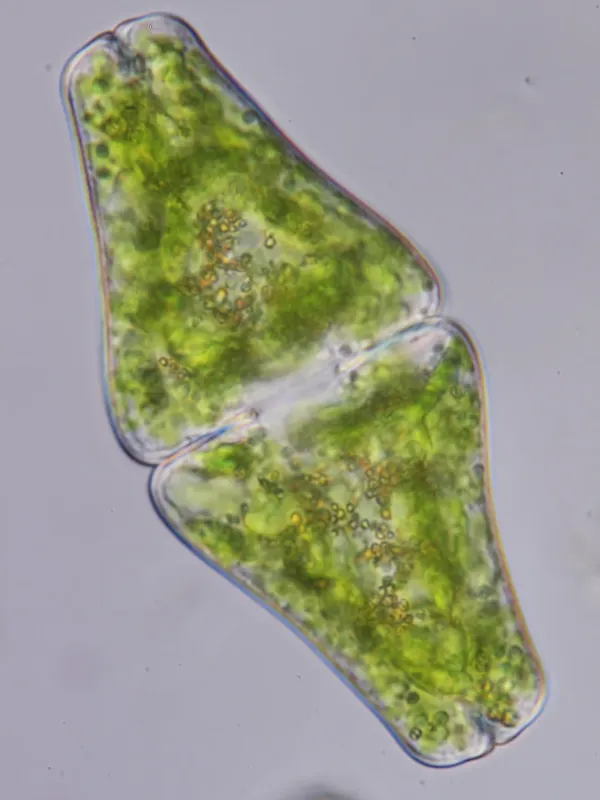
Description
Growing requirements
Euastrum ansatum is a species of unicellular green algae belonging to the family Desmidiaceae. It is a microscopic organism found in freshwater habitats and is not considered a cultivated agricultural crop.
The organism thrives in oligotrophic, slightly acidic waters, such as peat bogs and clear stagnant ponds. It requires low mineral content in the water and sufficient sunlight to perform photosynthesis efficiently.
Botanically, the cell is divided into two symmetrical semicells connected by a narrow isthmus where the nucleus resides. The cell wall is adorned with specific patterns, making it a classic object for phycological observation.
It occupies the primary producer level in the aquatic food web. The cell structure is highly specialized to absorb nutrients directly from the water column in low-nutrient environments.
In environmental studies, this alga serves as a valuable bioindicator. Its presence in a lake or stream confirms that the water quality is high and that the ecosystem is relatively free from pollution.
Main diseases and pests
The main threat to the species is eutrophication, which occurs when fertilizer runoff from farmland introduces high levels of nitrogen and phosphorus into aquatic systems. This shift in chemistry is detrimental to the species.
Chemical contamination by herbicides and pesticides significantly impacts the growth cycle of these sensitive organisms. Even trace amounts of industrial pollutants can disrupt their metabolic processes.
Changes in pH balance caused by atmospheric acid rain or agricultural drainage often lead to cell death. The species requires stable, specific chemical conditions to sustain its cellular integrity.
Competition from more aggressive, pollutant-tolerant algal blooms often displaces Euastrum ansatum. Once a habitat becomes compromised by organic pollution, this sensitive species is usually the first to vanish.
Loss of wetland habitats due to land reclamation and drainage poses a long-term risk. Without access to undisturbed, clean freshwater bodies, the geographical distribution of this algae continues to decline.