
Erica plukenetii
Erica plukenetii
Description
Growing requirements
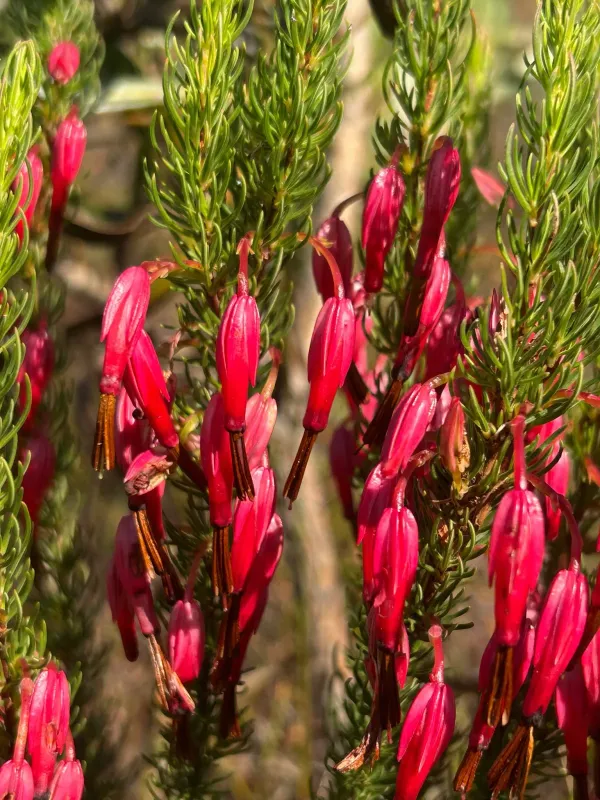
Erica plukenetii belongs to the Ericaceae family and is an evergreen shrub native to the Cape Floristic Region of South Africa. It is highly valued for its distinct, long tubular flowers that make it a standout among other heather varieties.
The plant requires acidic, well-draining soils with a pH ranging from 4.5 to 5.5. In its natural habitat, it thrives in rocky or sandy substrates that allow excess water to drain rapidly, preventing the root rot that often plagues potted specimens.
Regarding climate, Erica plukenetii is not frost-tolerant and requires a Mediterranean-like climate or greenhouse conditions. It demands full sun exposure to maintain its dense growth habit and to produce the high-quality floral displays characteristic of the species.
Agronomic management involves providing a substrate rich in organic matter, such as peat or pine bark, to ensure the necessary acidity. Watering must be done carefully, using only soft, lime-free water to prevent soil alkalinity and nutrient lockout.
The botanical structure of the plant features needle-like leaves arranged in whorls, which serve to reduce transpiration. This adaptation is crucial for the species to survive in the arid and windswept environments of its native southern African landscape.
Main diseases and pests
The most significant threat to Erica plukenetii is root pathogens triggered by poor drainage or overly dense soil. To mitigate this risk, gardeners must ensure that pots have adequate holes and a coarse drainage layer at the bottom.
Pests such as spider mites and scale insects are common when the plant is kept in dry, indoor environments with poor air circulation. Regular monitoring of the foliage and systemic treatments can effectively manage these infestations.
Nutritional deficiencies, specifically iron chlorosis, occur if the water or soil pH rises above the optimal range. Corrective measures include using iron chelate supplements and consistently maintaining soil acidity through specific fertilizers for acid-loving plants.
Fungal infections, including botrytis, can affect the flowers and foliage during periods of high humidity and stagnant air. Proper spacing and good ventilation are the best preventive measures to ensure the health of the collection.
Lack of proper pruning can result in a "leggy" appearance as the plant matures. Pruning should be performed annually after the flowering season to encourage new growth and maintain a compact, attractive shape.