
Erica pageana
Erica pageana
Description
Growing requirements
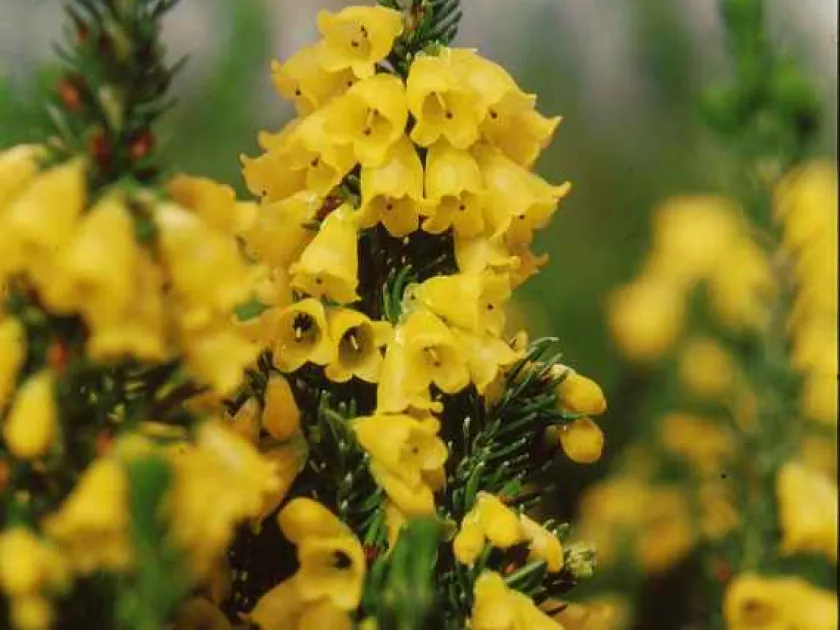
Erica pageana is a distinctive species within the Ericaceae family, native to the Western Cape region of South Africa. This evergreen shrub is highly valued by horticulturists for its bright yellow, tubular flowers that bloom in clusters at the tips of the branches.
The plant thrives in Mediterranean-type climates, requiring significant sunlight to maintain its compact growth habit and vibrant flowering. While it enjoys exposure to the sun, it is sensitive to intense, prolonged heat and requires adequate ventilation to prevent fungal issues.
Cultivation necessitates a specialized substrate: it must be highly acidic and extremely well-draining. Growers typically use a mix of peat moss and coarse sand, ensuring that the roots are never subjected to waterlogged conditions, which are often fatal to the plant.
In regions where frosts occur, Erica pageana must be managed as a container plant. During the dormant winter season, it should be moved to a protected, frost-free location that still receives plenty of indirect light, such as a cool greenhouse or a bright conservatory.
The primary use of this species is ornamental. It is frequently utilized in professional landscaping for rock gardens, heather beds, and as a decorative patio plant, provided that the grower can maintain the strict soil acidity levels required for its health.
Main diseases and pests
The most significant threat to Erica pageana is root rot, frequently caused by overwatering or the use of tap water with high mineral content. High alkalinity in the water will raise the soil pH, leading to chlorosis and eventual plant death.
Common pests include scale insects and mealybugs, which tend to hide in the dense foliage. Integrated pest management, including regular inspection and the application of horticultural soaps if necessary, is essential for maintaining the aesthetic quality of the plant.