
Whau
Entelea arborescens
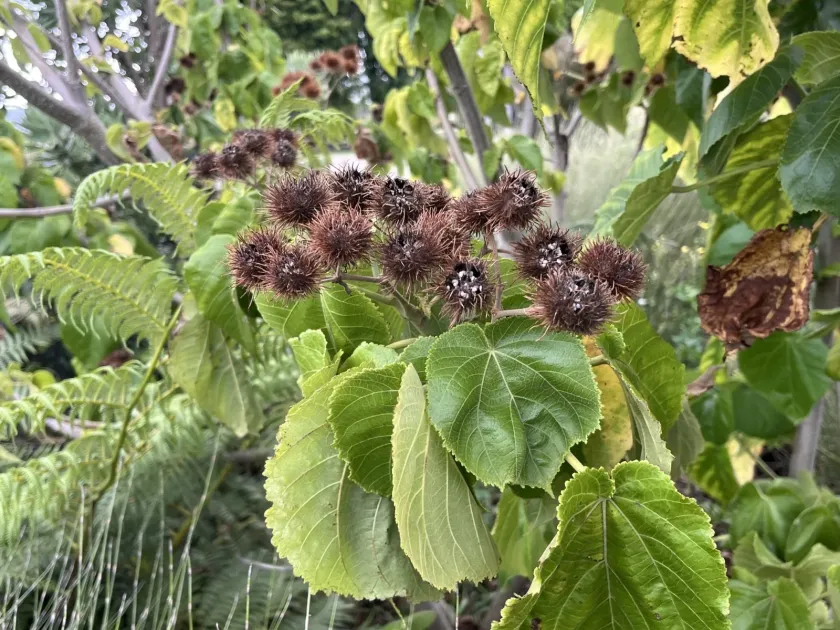
Description
Growing requirements
Whau (Entelea arborescens) is a fast-growing shrub or small tree belonging to the Malvaceae family. It is native to New Zealand, where it is found in coastal regions and lowland forests, often acting as a pioneer species.
The plant thrives in temperate to subtropical climates with high humidity. It is frost-tender and requires protection from temperatures dropping below freezing, making it suitable for glasshouses or mild coastal microclimates.
Soil requirements for the Whau include well-drained, nutrient-rich soils. It prefers organic-rich growing media and is intolerant of waterlogged conditions, which frequently lead to root rot and other pathogenic infections.
Lighting conditions should provide bright, indirect sunlight. While the plant can tolerate partial shade, too little light results in leggy growth, whereas excessive direct sun can cause leaf scorch in younger specimens.
Cultural practices involve steady irrigation, ensuring the moisture levels remain consistent without becoming saturated. Regular monitoring for nutrient deficiencies is advisable, especially for plants grown in containers.
Harvesting
The plant is historically significant to the Māori people, who utilized its bark to produce strong, durable fibers. These were historically fashioned into fishing nets, lines, and various cordage products due to their high tensile strength.
In modern horticulture, the Whau is appreciated for its aesthetic value. Its large, heart-shaped, bright green foliage and attractive white flowers make it an excellent choice for ornamental greenhouse collections.
The species is also noted for its lightweight wood, which has been used traditionally for making floats for fishing nets. This unique property makes the timber highly specialized for specific maritime tools.
Propagation is typically performed via seeds, which should be sown in a warm environment. Cuttings can also be used for vegetative propagation, although they require high humidity to prevent desiccation during the rooting phase.
Maintenance includes routine pruning to control the size and shape of the tree. This practice is essential for encouraging healthy branching and ensuring the plant remains a manageable size for ornamental displays.