
Englerodendron explicans
Englerodendron explicans
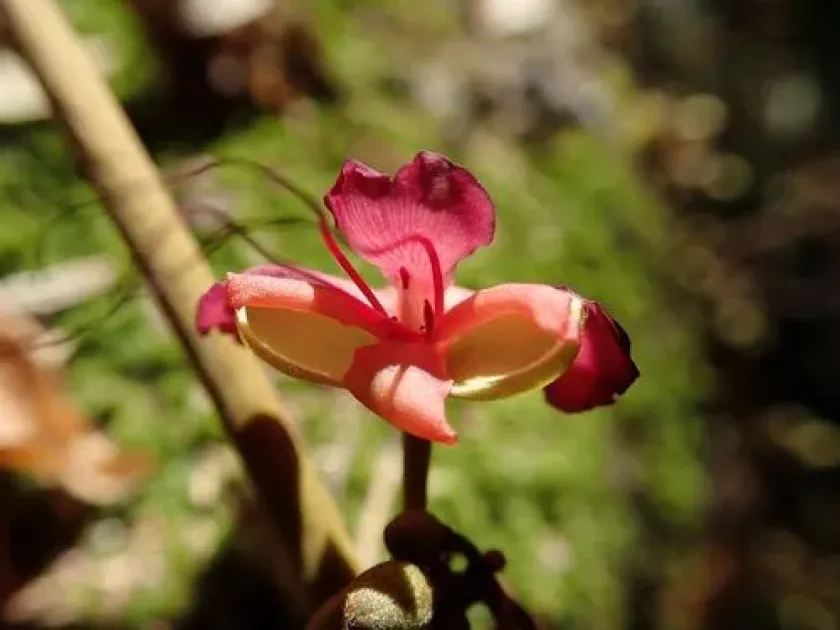
Description
Growing requirements
Englerodendron explicans is a prominent species within the Fabaceae family, native to the tropical forests of Africa. As a legume, it plays a vital role in soil enrichment through nitrogen fixation, which is crucial for forest ecosystem maintenance.
The plant thrives in a tropical climate characterized by constant warmth and high annual rainfall. It is highly sensitive to cold, and exposure to temperatures below 15 degrees Celsius can cause significant stress or death of the specimen.
Deep, fertile soils with excellent drainage are essential for the healthy development of this tree. It typically prefers clay-loam substrates that can retain moisture while preventing long-term waterlogging around the root zone.
During the early growth phase, young trees require partial shade to protect them from direct, intense sunlight. As the plant matures, it becomes more shade-tolerant but performs best in open canopy gaps where light is sufficient for photosynthesis.
Agricultural management should prioritize soil nutrient balance. Periodic testing for macronutrient levels ensures that the tree maintains vigorous growth, while consistent weeding around the base prevents competition for vital resources.
Harvesting
The timber of Englerodendron explicans is highly regarded for its durability and resistance to pests. It is frequently utilized in local carpentry and rural infrastructure, contributing to the livelihood of communities within its range.
Harvesting strategies involve selecting mature trees while preserving younger ones to ensure long-term population viability. Sustainable forestry practices are recommended to mitigate the impact of timber extraction on local biodiversity.
Seed collection requires monitoring the maturation cycles of the fruit. Proper processing of seeds is necessary to overcome physical dormancy, ensuring a high germination rate for nursery propagation.
Beyond timber, the species holds potential in pharmacological research due to the chemical profile of its bark and leaves. These parts are traditionally used in folk remedies for their purported antimicrobial and anti-inflammatory qualities.
Efficiency in harvest yields is closely tied to the density of the stand and the age structure of the plantation. Proper spacing during initial planting ensures that each tree reaches its maximum potential without overcrowding.