
Enemion biternatum
Enemion biternatum
Description
Growing requirements
Enemion biternatum, commonly known as the false rue anemone, is a perennial herbaceous plant belonging to the Ranunculaceae family. It is a woodland native that thrives in temperate climates, primarily serving as a decorative element in shaded garden environments rather than a staple crop.
The native distribution of this species is centered in North America, where it typically inhabits rich, moist forest floors and floodplains. It is adapted to shady ecosystems where competition for light is high, and soil moisture remains relatively consistent throughout the spring season.
Growing requirements for this species are specific: it mandates rich, well-draining soil with a high organic matter content. It thrives in partial to deep shade and cannot tolerate the high temperatures or intense sunlight characteristic of open field agricultural conditions.
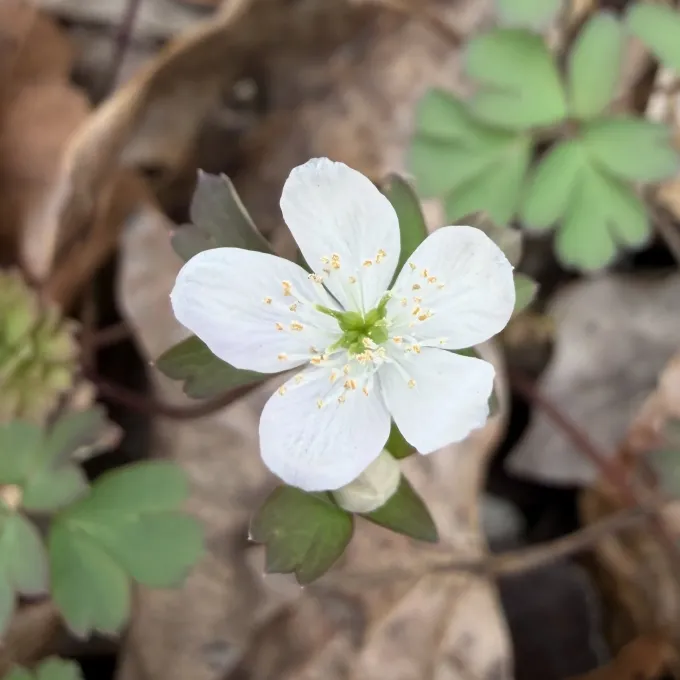
Botanically, the plant is characterized by delicate, compound leaves and small, white, star-like flowers that appear in early spring. It is a spring ephemeral, meaning its active growth cycle is concentrated in the early months before the full forest canopy closes, after which the foliage often dies back.
In terms of agricultural or economic use, Enemion biternatum has no commercial industrial application. Its usage is restricted to botanical gardens, restoration of native plant habitats, and ornamental cultivation for enthusiasts who specialize in shade-loving woodland perennials.
Main diseases and pests
The primary threats to this species involve the degradation of forest habitats, which leads to soil erosion and loss of necessary moisture. Since it is not a large-scale agricultural crop, it is not subjected to intensive pest management or pesticide programs.
In garden settings, root rot can occur if soil drainage is poor. To ensure the survival of the plant, it is essential to mimic its natural environment by providing a cool root zone and protection from high winds and direct sun, which can cause severe physiological stress to the delicate leaves.