
Elymandra lithophila
Elymandra lithophila
Description
Growing requirements
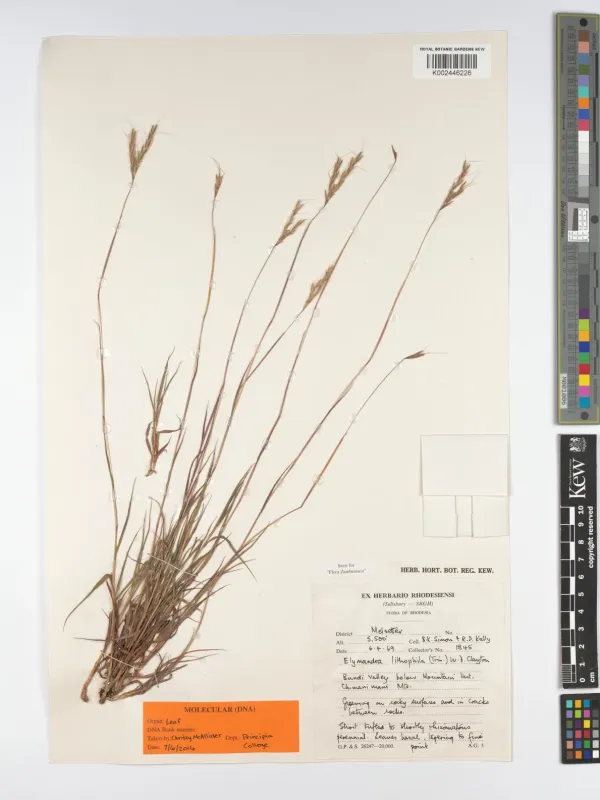
Elymandra lithophila is a perennial grass species belonging to the family Poaceae. The species is noted for its ability to thrive in rocky and nutrient-poor environments, showcasing high levels of environmental adaptability compared to other cereal or forage grasses.
The native distribution of this plant is primarily concentrated in the tropical regions of Africa. It has evolved to survive in habitats characterized by harsh solar radiation and periodic water stress, making it an excellent candidate for landscape restoration in arid tropical zones.
In terms of agricultural requirements, Elymandra lithophila demands soils with high drainage capacity. Waterlogging is detrimental to the root system, so sandy or rocky soils are ideal for supporting healthy growth and preventing rot.
Botanically, the plant is characterized by its tufted growth habit and narrow, drought-resistant leaf blades. The root system is highly efficient, allowing the plant to extract moisture from deeper soil layers, which is crucial for its survival during the dry season.
While not a traditional industrial crop, its role in preventing soil erosion and serving as a forage source for livestock in challenging climates makes it a subject of interest for sustainable agricultural research in its native range.
Main diseases and pests
The primary threats to Elymandra lithophila include various fungal leaf spot diseases that thrive under high humidity conditions. These pathogens can significantly inhibit photosynthesis and reduce the overall biomass production of the plant stand.
Insect pests, particularly orthopterans like grasshoppers, represent a significant pressure during the vegetative growth phase. High populations can cause extensive defoliation, negatively impacting the plant's ability to store energy for the next cycle.
Root system damage from soil-borne pests and nematodes can occur in improperly managed fields. Such damage often leads to nutrient deficiency symptoms and may cause the plants to become stunted and discolored.
Preventative measures are essential, such as maintaining appropriate plant spacing to ensure air circulation. Good sanitation practices are necessary to minimize the build-up of fungal spores within the field environment.
Monitoring the plant health regularly is recommended to manage pest pressure effectively. In agricultural settings, avoiding excessive fertilizers that lead to lush, susceptible growth is key to maintaining the plant's natural resistance.