
Wood apple
Limonia acidissima L.
Description
Growing requirements
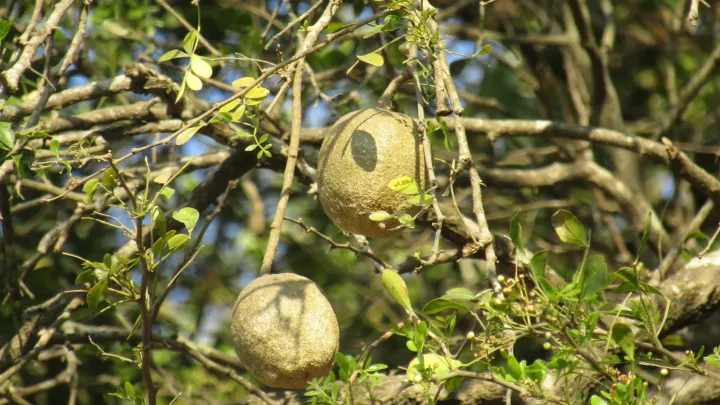
Limonia acidissima, commonly known as wood apple, belongs to the Rutaceae family. It is a slow-growing, deciduous tree that can reach heights of up to 9 meters, characterized by its sharp thorns and aromatic foliage that resembles citrus trees.
Native to the dry regions of India and Southeast Asia, this species is highly resilient. It thrives in tropical climates with distinct wet and dry seasons, demonstrating an impressive tolerance to drought conditions once the tree is fully established.
For successful cultivation, the plant prefers well-drained, fertile soil, ranging from sandy loam to clay loam. It is notably tolerant of saline or alkaline soils, making it a versatile choice for regions where soil quality is a limiting factor for other crops.
Temperature requirements remain consistent with tropical standards, ideally between 25°C and 35°C. The wood apple is a sun-loving plant that requires full exposure to sunlight to stimulate flowering and subsequent fruit set throughout the growing season.
Agronomic management involves periodic weeding and the application of organic manure to ensure robust development. Since the tree grows slowly, long-term planning is essential to maintain orchard productivity and manage branch spacing effectively.
Yield
The yield of a mature wood apple tree is substantial, providing numerous fruits encased in a hard, woody shell. Harvest timing is critical, as the fruit must reach physiological maturity to ensure the characteristic sour-sweet flavor of the pulp.
The fruit is commercially significant in many Asian countries. It is processed into juices, jellies, and chutneys, and the pulp is often dried for shelf-stable food products, highlighting the economic potential of this hardy tropical tree.
Main diseases and pests
The main threats to wood apple health are fungal pathogens, typically resulting from waterlogged soil or poor air circulation within the canopy. Implementing proper drainage and thinning the branches can mitigate these environmental risks significantly.
Pest management focuses on controlling sap-sucking insects like scale insects and mealybugs. Regular monitoring and the use of integrated pest management practices are recommended to protect tree vigor and maintain high-quality fruit production.