
Ehretia asperula
Ehretia asperula Zoll. & Moritzi
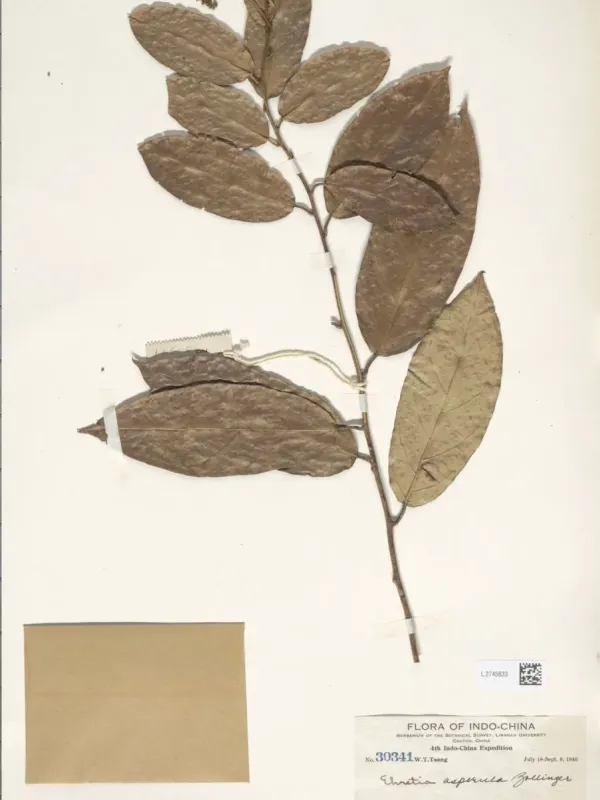
Description
Growing requirements
Ehretia asperula is a woody plant species classified within the Boraginaceae family. Native to the tropical regions of Southeast Asia, specifically Indonesia and surrounding islands, it has adapted to warm, humid environments.
Botanically, it is recognized by its shrubby or small tree habit and distinctively rough, textured leaves. These structural adaptations allow the plant to thrive in diverse microclimates within its natural habitat.
The plant requires well-drained, nutrient-rich soil to reach its full growth potential. While it can adapt to various soil types, maintaining a neutral to slightly acidic pH is ideal for nutrient uptake and overall vitality.
Sunlight exposure is a critical factor for Ehretia asperula. It prefers full sun to partial shade, ensuring that the foliage receives enough energy for photosynthesis while avoiding heat stress during peak hours.
Watering schedules must be balanced carefully. The plant requires consistent moisture during its active growth phase, but the substrate must be allowed to dry slightly to prevent the development of root rot pathogens.
Harvesting
The primary use of Ehretia asperula is within ornamental landscaping. Its ability to withstand structural pruning makes it a popular choice for garden hedges and sculpted architectural shapes in tropical climates.
In certain traditional agricultural settings, parts of the plant, such as leaves, are harvested for their therapeutic properties. It is essential to ensure that any harvest is conducted sustainably to preserve local biodiversity.
Maintenance of the plant involves seasonal trimming and pruning, which helps in stimulating denser foliage growth. Removing dead wood prevents the accumulation of moisture and reduces the risk of fungal infestation.
Propagation is commonly achieved via cuttings or seeds. Cuttings are generally preferred for commercial production as they guarantee phenotypic uniformity and reduce the time to maturity for the young plants.
Pest management should focus on preventing common tropical insects such as aphids and scale insects. Maintaining proper spacing and airflow between plants significantly reduces the vulnerability to these threats.