
Efulensia clematoides
Efulensia clematoides
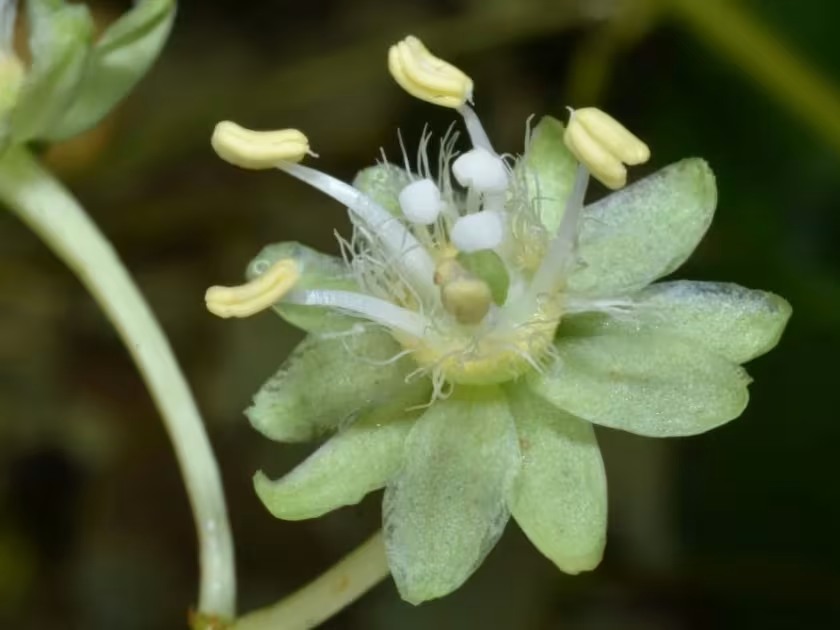
Description
Growing requirements
Efulensia clematoides is an evergreen woody vine belonging to the Passifloraceae family. The plant features characteristic climbing stems that utilize specialized tendrils to anchor themselves onto vertical supports within dense forest ecosystems.
The natural range of this species is primarily concentrated in the tropical rainforests of West and Central Africa. The plant thrives in moist, shaded environments with humus-rich soils, where it can successfully compete for sunlight by climbing into the upper strata of the forest canopy.
For successful growth, this crop requires consistently high temperatures without extreme seasonal fluctuations and a high level of atmospheric humidity. Optimal developmental conditions mimic the microclimate of the tropical understory, where the soil remains consistently moist while maintaining adequate aeration.
In natural settings, Efulensia depends on the presence of vertical supports, typically provided by trees and large shrubs. The vine's root system is adapted to absorb nutrients from the surface layer of the soil, which necessitates maintaining the root zone protected from desiccation and overheating.
Biologically, the plant demonstrates rapid growth rates provided there is sufficient moisture. The leaves exhibit a shape typical of clematis-like species, which ensures efficient photosynthesis under the diffuse light conditions common in the forests of the African region.