
Duma florulenta
Duma florulenta
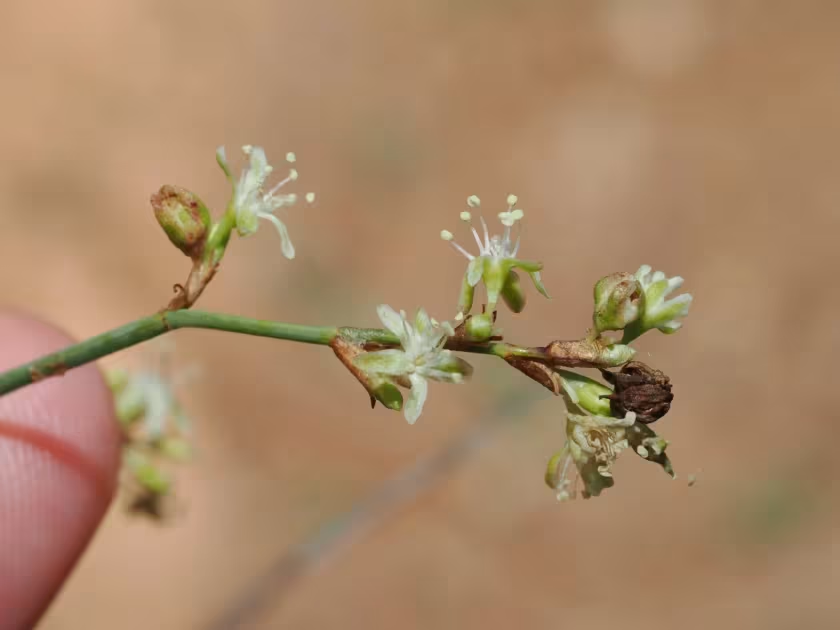
Description
Growing requirements
Duma florulenta, commonly known as Lignum or tangled lignum, belongs to the Polygonaceae family. It is a perennial shrub recognized by its distinct tangled, wiry stems that form dense, impenetrable thickets in its native Australian habitats.
The plant is native to arid and semi-arid regions. In agricultural settings, it serves as a critical crop for soil stabilization and erosion control. Its resilience allows it to thrive in saline environments where many other crops would fail to establish.
Regarding climate and soil, Duma florulenta requires full sun exposure and well-drained soil. It is exceptionally tolerant of alkaline conditions and low-nutrient substrates, making it an excellent candidate for land reclamation projects in degraded landscapes.
Water requirements for this species are minimal once the plant is established. Its root system is capable of accessing deep groundwater, providing the plant with high drought tolerance, which is essential for sustainable farming in desert-fringe areas.
Agricultural management is relatively low-intensity. Farmers focus on initial establishment and area control. Due to its vigorous growth, the shrub can expand rapidly, requiring controlled planting layouts to ensure it does not encroach on other essential infrastructure.
Main diseases and pests
Duma florulenta is remarkably resistant to typical agricultural diseases. Its chemical composition makes it unappealing to many herbivorous pests, which reduces the need for synthetic chemical interventions in its cultivation.
However, during periods of high humidity, fungal pathogens like powdery mildew can appear. Such infections are usually symptomatic of poor air circulation within the thicket, which should be corrected by pruning or adjusting plant density.
Common pests include locusts and grasshoppers, which can defoliate the plant during extreme drought years. These threats are generally managed through biological controls rather than large-scale insecticide application to preserve the local ecology.
Root-feeding insects can occasionally be problematic in nursery stages. Using sterile growing media and proper site preparation helps to mitigate these risks effectively before transplanting to open fields.
Long-term protection strategies rely on maintaining the overall vigor of the shrub. A healthy, well-spaced stand of Duma florulenta naturally suppresses weed competition and resists opportunistic infections, ensuring stable growth over many years.