
Ducrosia anethifolia
Ducrosia anethifolia
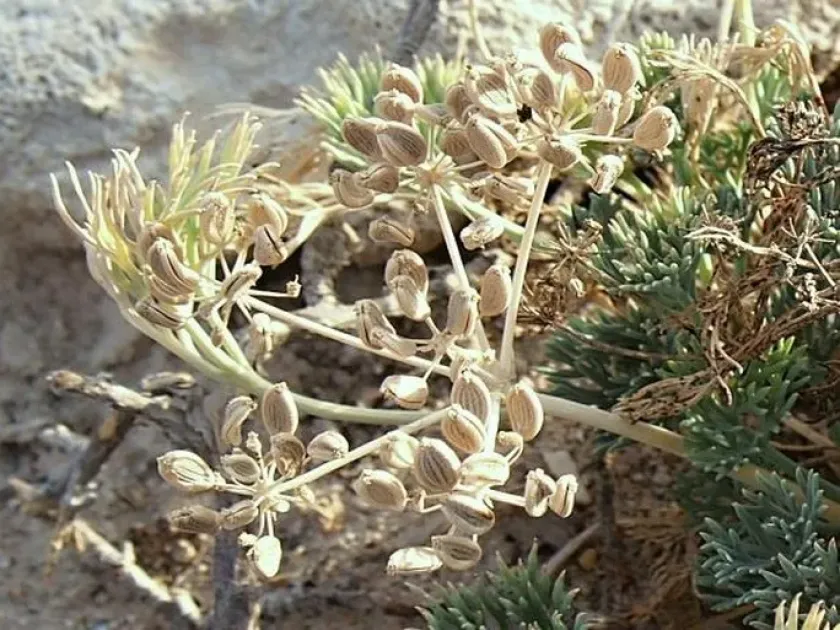
Description
Sowing dates
Sowing should be performed in early spring as the soil warms up. Pre-sowing treatments, such as stratification, are recommended to break dormancy and improve seed germination rates.
Seeds should be planted at a shallow depth of approximately 1 to 2 centimeters. Because the seedlings are delicate, the seedbed must be finely prepared to ensure even emergence.
Row spacing should be kept between 45 and 60 centimeters. This allows for adequate airflow and provides space for mechanical weeding, which is crucial during the early stages of growth.
Maintaining soil moisture during the first few weeks after sowing is essential for success. Once the taproot system is established, irrigation should be significantly reduced.
The optimal plant density is approximately 20 to 25 plants per square meter to ensure individual plants have sufficient space to reach their full potential without excessive competition.
Growing requirements
Ducrosia anethifolia is a perennial herb belonging to the Apiaceae family. It is natively adapted to arid and semi-arid environments, which dictates its specific agricultural requirements.
The plant thrives in well-drained, sandy or stony soils. It is highly resilient to poor soil fertility and can tolerate moderate levels of salinity, making it suitable for regions with challenging soil conditions.
Adequate sunlight is the most critical factor for the production of essential oils. The species requires full sun exposure throughout its vegetative growth to ensure the development of its aromatic profile.
Water requirements for Ducrosia anethifolia are quite low. Once the plants are established, they show high drought resistance, and excess irrigation often leads to root rot or fungal infections.
The optimal temperature range for growth is between 20°C and 28°C. The plant can withstand significant diurnal temperature variations common in its natural habitats.
Yield
The yield of Ducrosia anethifolia depends heavily on the stage of harvest. Harvesting during the peak flowering phase results in the highest concentration of volatile oils.
Under good agricultural conditions, the green biomass yield can reach 2 to 3 tonnes per hectare. Dried biomass generally accounts for about 30-40% of the fresh harvest weight.
The plantation can remain productive for 4 to 5 years. Productivity typically increases from the first year to the third, after which it tends to stabilize or decline slightly.
Harvesting strategies should prioritize the preservation of the crown. Cutting too low can damage the plant's ability to regenerate in subsequent years.
Regular fertilization with trace elements and moderate nitrogen application can improve biomass production without sacrificing the chemical quality of the essential oils.
Main diseases and pests
Root rot is the primary threat to this culture, usually caused by poor drainage or excessive watering. Selecting a well-draining site is the most effective preventative measure.
Aphids can cause damage to tender leaves and stems. Integrated pest management, focusing on biological controls, is preferred over the use of harsh chemical insecticides.
Powdery mildew may occur during periods of high humidity. Proper plant spacing and ensuring good airflow within the canopy are effective ways to mitigate this disease.
Weed competition is a major challenge during the early seedling stage. Once the plants reach a certain size, they are generally strong enough to compete with most common weeds.
Soil-borne pathogens can be a concern if crop rotation is neglected. Rotating with non-Apiaceae crops is highly recommended to maintain soil health.
Harvesting
Harvesting should be done early in the morning, immediately after the dew has evaporated but before the heat of the day, to maximize the retention of aromatic compounds.
Leaves and stems are typically harvested by hand or using specialized machinery, keeping the cut at a height that allows the plant to recover effectively.
Drying must be conducted in the shade in a well-ventilated area. Direct sunlight will cause the degradation of essential oils, significantly lowering the commercial value of the crop.
Once dried, the plant material should be sorted to remove any woody stems or debris. This process ensures the final product meets the standards for pharmaceutical or perfume use.
Storage should be in cool, dry, and dark conditions, using airtight containers to prevent the loss of fragrance and moisture contamination.