
Rasp fern
Doodia media
Description
Growing requirements
Doodia media, commonly known as the Rasp fern, belongs to the family Blechnaceae. Native to parts of Australia and New Zealand, this plant is naturally adapted to forest floors and rocky outcrops, where it thrives in shaded and humid environments.
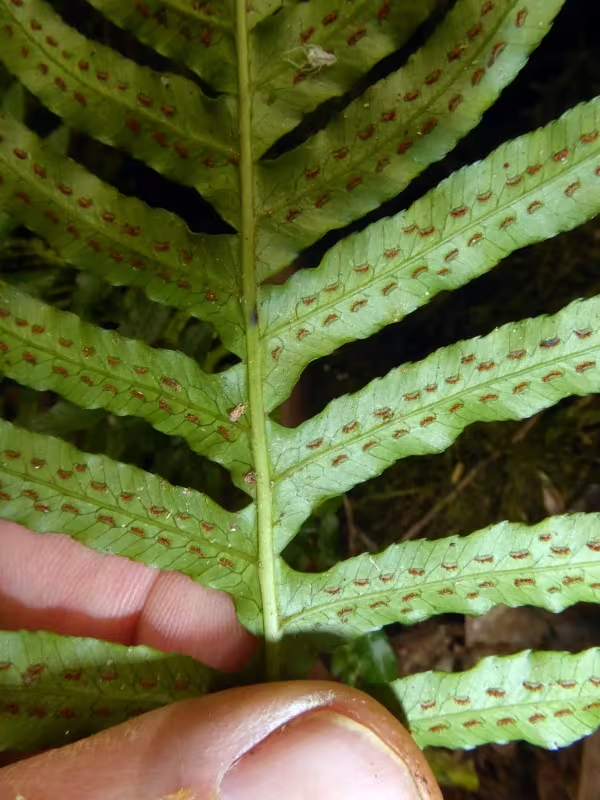
Botanically, the species is distinguished by its leathery fronds that emerge in attractive shades of pink or deep red, gradually deepening into a robust dark green. The plant possesses a spreading rhizome, allowing it to colonize available space effectively in stable ecological niches.
For successful cultivation, the Rasp fern requires bright, indirect light. Direct exposure to intense solar radiation should be avoided to prevent foliar damage. The ideal temperature range is between 18 and 24 degrees Celsius, with protection against extreme fluctuations being essential.
Soil requirements involve a well-draining, slightly acidic potting mix. A combination of high-quality peat, perlite, and organic leaf mold provides the necessary structure and nutrient content. Proper drainage is critical to ensure that roots are not left in stagnant water, which invites pathogens.
Humidity management is the cornerstone of Doodia media care. As an understory plant, it flourishes in environments with high ambient moisture. Regular misting, the use of humidity trays, or placement in well-ventilated bathrooms is often recommended to maintain the frond health.
Main diseases and pests
The primary pests affecting this plant are spider mites and scale insects, which often target stressed plants in dry environments. Additionally, improper watering habits can lead to root rot, necessitating the application of fungicides and a strict adjustment to irrigation schedules.