
River rose
Bauera rubioides Andrews
Description
Growing requirements
Bauera rubioides, commonly known as the River rose or Wiry bauera, is an evergreen shrub belonging to the Baueraceae family. Native to the damp, sheltered forests and coastal regions of eastern Australia and Tasmania, it is highly valued for its elegant, arching growth habit and profuse blooming.
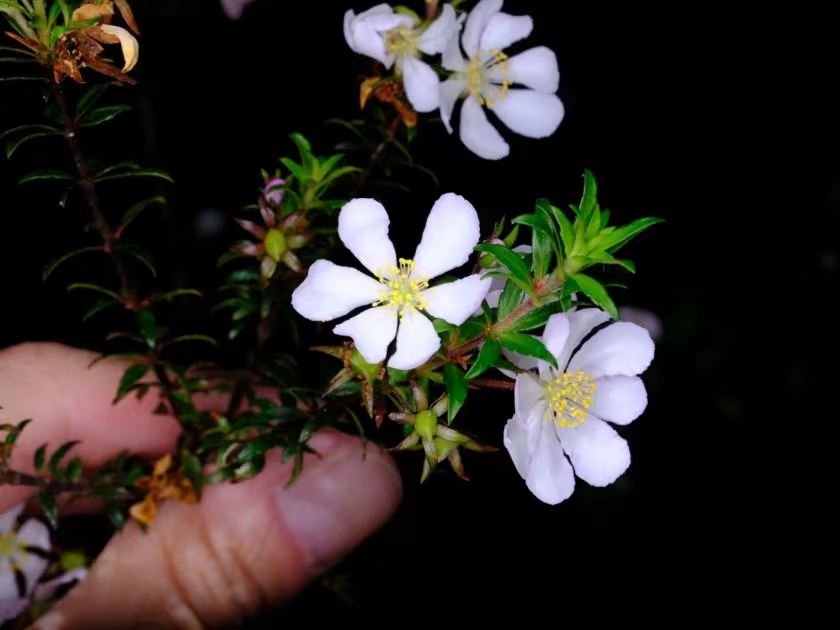
The plant features small, trifoliate leaves arranged in opposite pairs along thin, wiry stems. These stems often create a dense, tangled habit, making it an excellent candidate for semi-formal hedges or as a filler plant in native garden designs within suitable climates.
To thrive, this plant requires acidic, well-draining, and consistently moist soil. It is notoriously intolerant of drought, requiring regular watering, especially when kept in pots. In its native habitat, it often grows near creeks, which indicates its preference for high humidity levels.
Climate requirements include protection from extreme heat and freezing temperatures. While it can handle mild frosts, it is not hardy in regions with harsh winters. Gardeners in cooler climates typically grow it in containers, allowing for easy relocation to a sheltered spot or greenhouse during the winter months.
The aesthetic appeal of the River rose lies in its flowers, which bloom in shades ranging from soft pink to white. These blossoms emerge from the leaf axils, covering the stems and providing a delicate, rose-like appearance that lasts throughout the spring and early summer seasons.
Main diseases and pests
The most significant threat to the health of Bauera rubioides is root rot. This condition is triggered by waterlogged soil conditions, often occurring when the drainage is insufficient or when the plant is overwatered during colder, low-growth periods.
Pests that frequently trouble this species include spider mites, which are particularly problematic in dry environments. These pests cause discoloration and needle-drop on the foliage, significantly affecting the plant's overall appearance and vigor.
Scale insects can also infest the stems, extracting plant sap and leading to a decline in growth. Manual removal or the application of horticultural oils is usually recommended for minor infestations to avoid the use of harsh chemicals.
Preventative measures for pest and disease management include maintaining proper spacing between plants to encourage air circulation and checking the soil moisture levels before adding more water. Avoid overhead watering in the evenings to reduce the risk of fungal infections.
Nutrient deficiency, particularly iron chlorosis, may occur if the soil pH becomes too alkaline. Ensuring the use of acidic fertilizers and maintaining a low pH is essential for keeping the foliage a healthy, deep green throughout the growing season.