
Discospermum sphaerocarpum
Discospermum sphaerocarpum
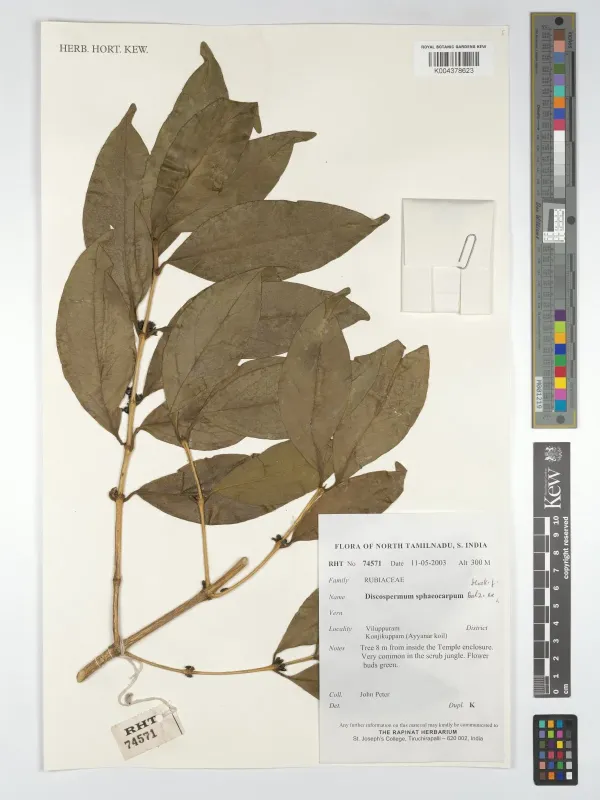
Description
Growing requirements
Discospermum sphaerocarpum is a woody plant belonging to the Rubiaceae family. Native to the humid tropical regions of Southeast Asia, this species exhibits unique morphological features typical of tropical evergreen vegetation.
The plant thrives in regions with consistently high rainfall and warm temperatures. In controlled environments, it requires a stable climate where the temperature does not drop below 18 degrees Celsius, ensuring continuous physiological processes.
Soil requirements involve a nutrient-rich, acidic to neutral substrate with high organic matter content. Excellent drainage is non-negotiable, as waterlogged conditions quickly lead to root rot and severe developmental decline.
Light management is a critical agronomic factor. The species prefers filtered, bright light. Direct sunlight exposure during peak hours can cause leaf scorch, significantly reducing the photosynthetic capacity of the plant.
Currently, the usage of Discospermum sphaerocarpum is largely academic and ornamental. Its unique spherical fruits and glossy foliage make it a subject of interest for specialized horticulture and ex-situ conservation programs.
Main diseases and pests
Fungal pathogens represent the primary threat, particularly when air circulation is inadequate. Pathogens like Phytophthora and Pythium species can proliferate in poorly drained substrates, leading to systemic infection.
Insect pests, such as aphids and whiteflies, often target the tender shoots of the plant. Their feeding habits cause chlorosis and can vector viral diseases, compromising the overall health of the specimen.
Effective management includes maintaining proper spacing to ensure adequate airflow. Pruning diseased sections immediately is essential to prevent the spread of fungal spores to healthy tissue.
Integrated Pest Management (IPM) practices are highly recommended. This includes regular scouting for pests and using neem oil or insecticidal soaps as the first line of defense before resorting to systemic pesticides.
Monitoring substrate moisture levels using sensors can help prevent irrigation-related stress. Healthy plants are inherently more resilient to pest outbreaks and environmental fluctuations, requiring less chemical intervention.