
Diplolaena angustifolia
Diplolaena angustifolia Hook.
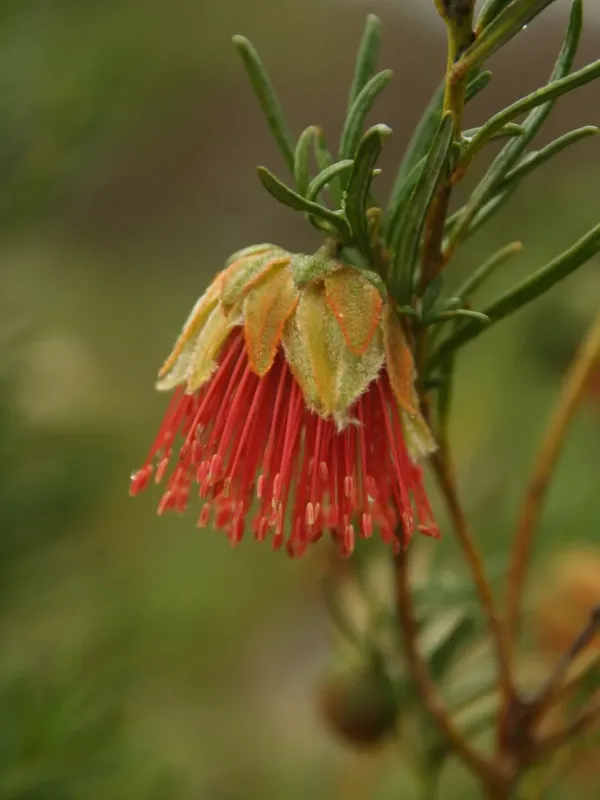
Description
Growing requirements
Diplolaena angustifolia is a distinct evergreen shrub belonging to the Rutaceae family. It is recognized as an endemic species native to the southwestern regions of Western Australia, where it thrives in natural, uncultivated landscapes.
Botanically, the shrub is known for its narrow, sclerophyllous leaves and unique flower heads protected by large bracts. These inflorescences are often bright red or orange, serving as a primary adaptation to attract specific pollinators.
The cultural success of this plant depends heavily on soil drainage. It requires sandy, low-phosphorus soils that do not retain excess water, as the roots are highly susceptible to rot if subjected to waterlogging.
In terms of climate, it is well-adapted to Mediterranean patterns, preferring full sun exposure. It displays significant drought tolerance once established, making it suitable for low-maintenance gardening in arid climates.
The plant is primarily utilized in horticultural settings, specifically in native garden designs. Its ability to thrive in poor soils and its high ornamental value make it a sought-after species for botanical collections and xeriscaping.
Main diseases and pests
The most significant threat to Diplolaena angustifolia is root rot, particularly caused by Phytophthora species, which flourish in wet, poorly drained soil conditions.
Common horticultural pests, such as scale insects and mealybugs, can infest the foliage, reducing the plant's aesthetic value and overall vigor.
Management of these threats is centered on cultural practices, specifically the maintenance of impeccable drainage and avoiding over-irrigation during summer.
To prevent disease transmission, gardening tools should be sanitized, and any plant material exhibiting signs of necrosis should be immediately removed and destroyed.
Regular monitoring of the canopy and base of the shrub is essential for early detection of potential insect infestations or signs of fungal pathogens.