
Diphyscium foliosum
Diphyscium foliosum
Description
Growing requirements
Diphyscium foliosum is a distinct species of acrocarpous moss belonging to the Diphysciaceae family. While not an agricultural crop in the commercial sense, it is an essential organism in bryology and forest ecology, often serving as a primary stabilizer of soil surfaces in temperate forest environments.
This moss species thrives in environments with high ambient humidity and shade. Typical habitats include exposed mineral soil on stream banks, shaded forest slopes, and trail sides where the moisture content remains high throughout the growing season.
The geographical distribution spans across Europe and parts of Asia. The species is highly sensitive to desiccation, requiring a microclimate protected by forest canopy. It demonstrates a preference for acidic to slightly neutral substrates, avoiding highly mineralized or stagnant wetland areas.
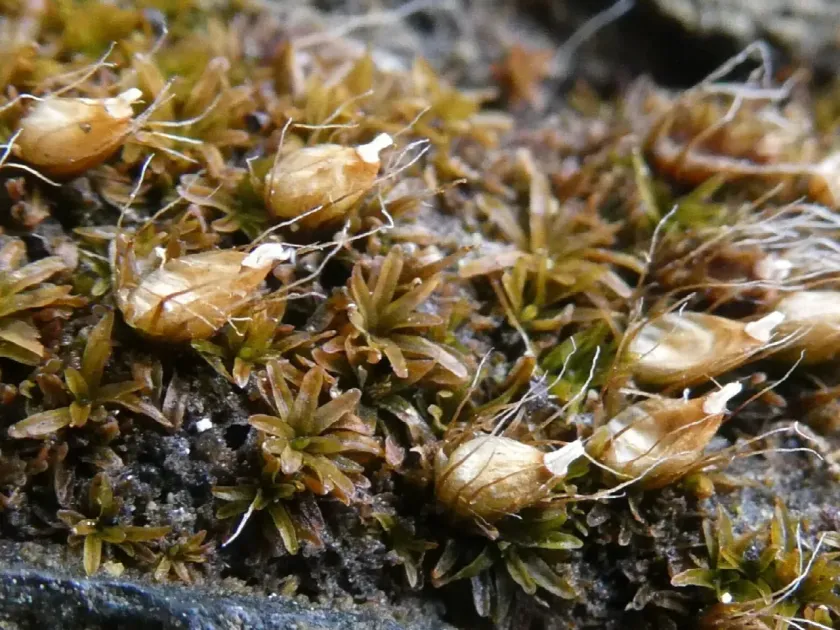
Botanically, Diphyscium foliosum is characterized by its compact, bulb-like appearance and its unique sporophyte, which remains mostly embedded within the leaf rosette. This specialized morphology allows the plant to protect its reproductive structures until the optimal conditions for spore dispersal are reached.
From an ecological management perspective, cultivating this moss requires controlled humidity, specific light filtering to prevent overheating, and high-purity water sources. Due to its sensitivity to pollutants, it acts as a bioindicator for forest health and atmospheric quality.
Main diseases and pests
Major threats to the survival of this moss include direct physical disturbance of the soil surface, such as erosion caused by deforestation or heavy human traffic in protected forest areas.
Environmental threats also include climate change, which leads to unpredictable drought cycles that exceed the physiological limits of the moss, and chemical pollution, which negatively impacts the delicate water absorption mechanisms required for its growth.