
Dictyosphaerium pulchellum
Dictyosphaerium pulchellum Wood
Description
Growing requirements
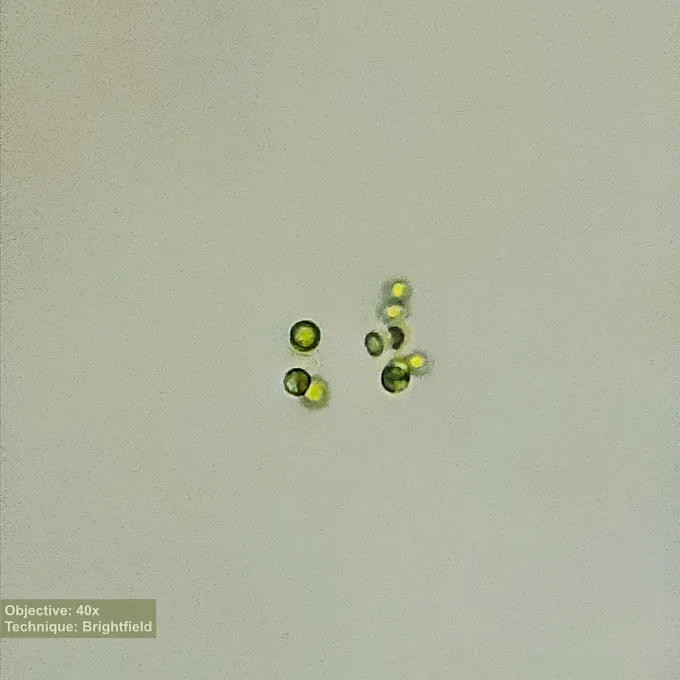
Dictyosphaerium pulchellum is a colonial green microalga belonging to the Trebouxiophyceae class. Its cells are characterized by an oval or spherical shape, embedded within a mucilaginous matrix that connects the cells of each colony, derived from the remnants of the parental cell walls.
This species is globally distributed, frequently found in freshwater habitats such as lakes, ponds, and slow-moving streams. It plays a significant role in aquatic food webs, serving as a primary producer in phytoplankton communities across various temperate and tropical climate zones.
For controlled cultivation, the species requires a well-balanced growth medium providing essential macronutrients like phosphorus and nitrogen. Optimal growth occurs at temperatures ranging from 18°C to 24°C, with a light-dark cycle that mimics natural diurnal rhythms to promote biomass synthesis.
Botanical and morphological stability is maintained by ensuring sufficient carbon dioxide supply and appropriate light intensity. If light levels become too high, the cultures may experience photoinhibition, while low levels limit the reproductive rate of the colonial clusters.
The industrial and scientific applications of this alga include its use in lipid production research and its effectiveness in bioremediation. By absorbing excess nutrients from aquatic environments, it helps prevent eutrophication, making it a valuable tool in water treatment systems.
Main diseases and pests
The main threats to cultivation include predatory protozoa and rotifers, which can rapidly diminish a healthy culture. Fungal pathogens are also a significant risk factor, as they can breach the mucilaginous colonial structure and disrupt cellular integrity, leading to total culture failure.