
Wood-root carnation
Dianthus xylorrhizus
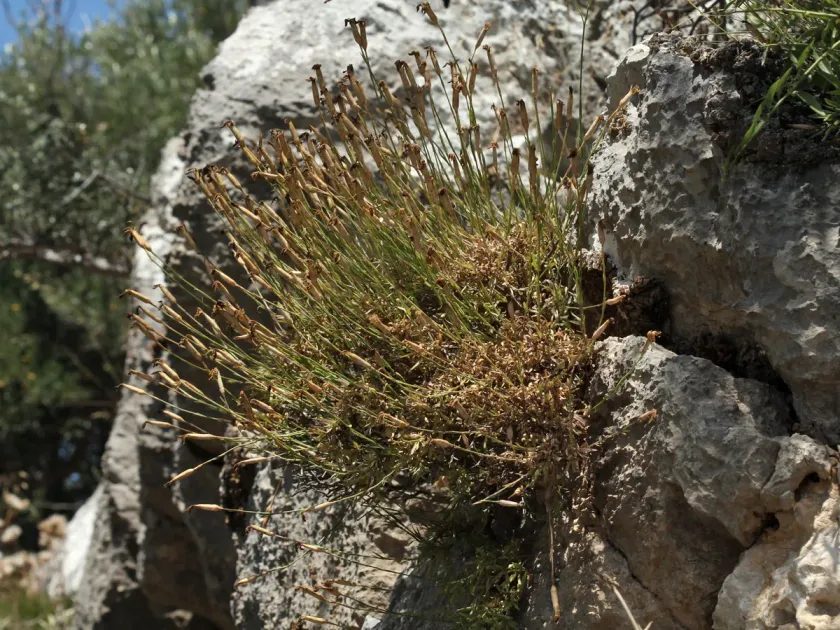
Description
Growing requirements
The wood-root carnation (Dianthus xylorrhizus) is a unique perennial plant belonging to the Caryophyllaceae family. Native to the mountainous regions of Turkey, it is recognized for its specialized root system that exhibits lignification, allowing the plant to thrive in harsh, rocky environments.
Botanically, this species is well-adapted to poor, rocky soils. In its natural habitat, it survives on limestone cliffs and mountain slopes, which dictates its high requirement for excellent drainage and slightly alkaline soil pH levels.
Cultivation of this rare plant requires full sun exposure to ensure robust growth and bloom production. It is highly intolerant of waterlogged conditions, making well-draining mineral-based substrates essential for container or rock garden growth.
The plant demonstrates high drought tolerance, a trait inherited from its evolutionary adaptation to arid high-altitude climates. However, during the growing season, consistent but moderate moisture is beneficial for foliage development.
Proper airflow is crucial for this species to remain healthy. When grown in artificial environments, spacing should be sufficient to prevent stagnant air, which can negatively impact the plant's long-term health and structural integrity.
Main diseases and pests
Dianthus xylorrhizus is primarily susceptible to fungal diseases such as Fusarium wilt, especially when growing in poorly aerated or overly damp substrates. Maintaining dry roots is the most effective prevention strategy.
Pests that commonly impact this species include spider mites and carnation leaf miners. These pests can cause significant leaf damage, weakening the plant if infestations are not addressed during the early stages.
Management of these threats involves careful monitoring of the foliage and implementing integrated pest management techniques. Chemical treatments should be used sparingly and only when necessary to preserve the plant's health.
Root rot is a frequent cause of decline, typically triggered by improper watering practices or heavy, clay-based soils that retain too much water around the root zone. Amending the soil with grit or perlite is highly recommended.
To ensure plant longevity, it is advised to avoid overhead watering, which promotes fungal growth. Applying water directly to the base of the plant or using a drip irrigation system is far more effective for this specific species.