
Dennettia tripetala
Dennettia tripetala
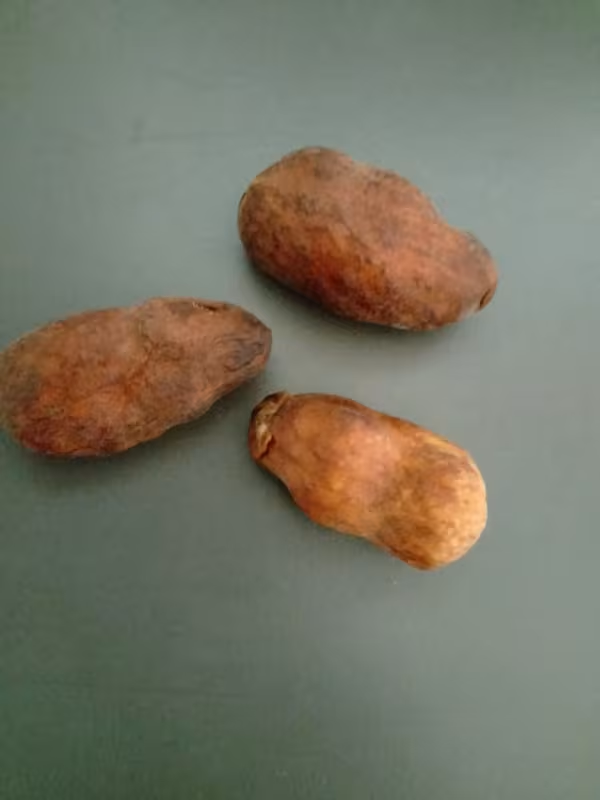
Description
Sowing dates
Propagation of Dennettia tripetala is primarily achieved through seeds. In its natural habitat, the fruits fall to the forest floor, where natural germination occurs under favorable moist conditions.
For cultivation, seeds should be sown immediately after extraction from the fruit, as they rapidly lose viability when dried. A loose, organic-rich forest soil is the optimal substrate, ensuring proper drainage to prevent waterlogging.
The temperature for successful germination should be maintained between 25 and 30 degrees Celsius. It is crucial to provide stable soil moisture while avoiding excessive water, which could lead to seed decay during the incubation period.
Seedlings develop quite slowly and require protection from direct sunlight during the first months of growth. Transplanting the young trees to their final location is best performed at the beginning of the rainy season when soil moisture is at its peak.
Planting density must account for the future development of the canopy; it is optimal to maintain a distance of at least 5 to 7 meters between individual trees to ensure proper growth and air circulation.
Growing requirements
Dennettia tripetala belongs to the Annonaceae family and is a tropical woody plant. It prefers humid forest environments where high relative air humidity is observed throughout the year.
The crop has high soil quality requirements, favoring deep, well-drained loams with high humus content. Dennettia performs poorly in saline or heavy clay soils where root oxygen access is restricted.
For normal development, the tree requires diffused light when young, although mature specimens can successfully thrive under conditions of moderate shading or full sun exposure in agroforestry systems.
Optimal climatic conditions involve an average annual temperature of around 26 degrees Celsius. The species is highly sensitive to extreme temperature fluctuations and cannot withstand even light frosts, restricting its cultivation to tropical regions.
Regular irrigation is critical during the first two to three years of the tree's life, until the root system is established in the deeper soil layers capable of retaining natural moisture.
Yield
The yield of Dennettia depends on the tree's age and the level of management provided. The first fruit harvest usually occurs between 5 and 8 years after planting, which is typical for slow-growing tropical Annonaceae species.
The fruits are aggregate berries containing seeds covered with a pungent, spicy pulp. As they mature, the fruits change color from green to bright red or yellow, which serves as a visual signal that harvesting should begin.
Commercial use includes the consumption of seeds and pulp as a spicy seasoning that tastes similar to black pepper. The seeds are often ground into powder, which is highly valued in both traditional medicine and West African culinary practices.
Harvest efficiency depends on canopy density, as fruits can be distributed along both primary branches and young shoots. Professional farms utilize selection methods to increase the proportion of edible pulp in the fruits.
Beyond the fruit, the leaves and roots of the tree are also valuable, as they are used in traditional medicine, significantly increasing the overall economic viability of cultivating this species on smallholder farms.
Main diseases and pests
The main threat to Dennettia comes from various phytopathogenic fungi that cause leaf spot and root rot in conditions of high humidity. Regular sanitary pruning of the canopy is essential to improve aeration and mitigate these risks.
Pests such as mealybugs and aphids can infest young shoots, extracting sap and suppressing the plant's growth. Insecticides based on botanical extracts are effective in managing these pests during early stages of infestation.
Larvae of certain coleopteran species can damage the bark and wood by boring tunnels inside the trunk. This weakens the tree and makes it vulnerable to secondary infections, making regular trunk inspections a necessary agricultural practice.
Soil-dwelling nematodes pose a serious risk to the root system. To combat them, it is recommended to employ mulching techniques and apply organic fertilizers that promote the growth of beneficial soil microbiota.
Weed infestation in the rooting zone creates competition for nutrients and water, so it is necessary to keep the soil clean, regularly removing weeds within a 1 to 2-meter radius from the trunk.
Harvesting
Harvesting is conducted manually by cutting ripe fruits with a sharp tool to avoid damaging the fruit buds located nearby. Avoid mechanical shaking, as this can lead to damage to the tree bark and reduced future yield.
Harvest timing is determined visually: fruits must reach the characteristic color associated with the cultivar. Immature fruits lack the sufficient concentration of essential oils that provide their specific spicy flavor.
After harvesting, the fruits must be cleaned of stalks and subjected to primary processing, such as sun drying or using mechanical dryers at temperatures up to 40 degrees Celsius to preserve active compounds.
Storing the seeds requires airtight containers to prevent the loss of volatile compounds responsible for the pungent aroma. When kept at a stable temperature, the product maintains its quality for up to 12 months.
Transportation of the fruits should be carried out in ventilated crates, as airtight packaging can trigger a fermentation process that irreversibly alters the chemical composition and quality of the spice.