
Menzies' larkspur
Delphinium menziesii
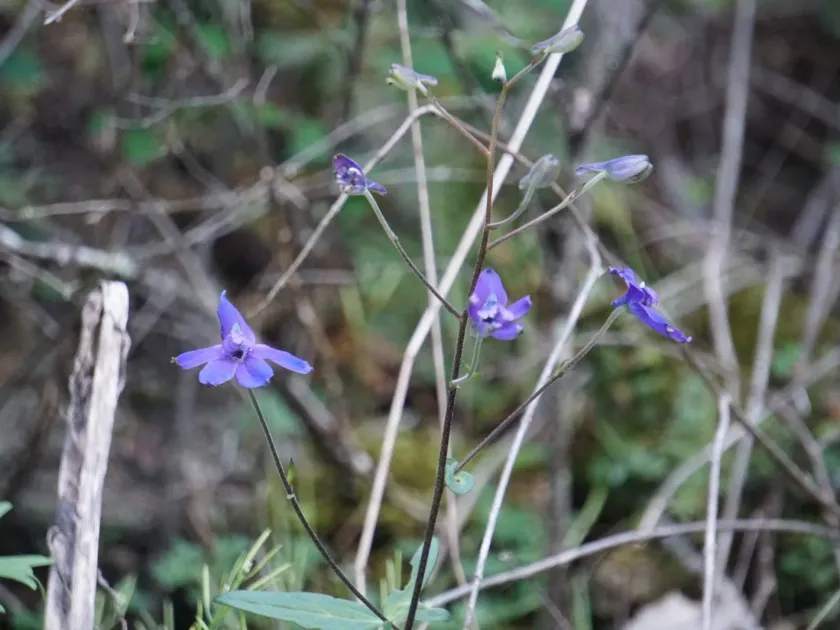
Description
Growing requirements
Menzies' larkspur (Delphinium menziesii) is a perennial herb belonging to the Ranunculaceae family. Native to western North America, this species is well-adapted to habitats characterized by open, grassy slopes and well-drained rocky soils.
This plant thrives in full sun exposure. It requires soil that provides excellent drainage, as the species is highly susceptible to root rot if water remains stagnant around the crown. Sandy or gritty soil types are preferred to mimic its natural environment.
The cultural requirements are centered on providing a cool, moist spring period followed by a drier summer. As a plant that goes dormant after flowering, it is essential to mark the location of the bulbs or roots to avoid damaging them during the summer.
Menzies' larkspur has a distinct growth cycle, emerging early in the season to produce vivid blue to violet flowers. Its compact habit makes it a valuable addition to rock gardens, alpine displays, and borders where taller varieties might be impractical.
Gardeners should note that the plant's nutrient requirements are modest. Over-fertilization can lead to weak, leggy stems rather than the compact, robust growth typical of wild specimens, therefore, minimal intervention is suggested.
Main diseases and pests
The most significant threat to Menzies' larkspur is fungal infection, particularly root rot, triggered by poor soil aeration or excess winter moisture. Ensuring a well-draining medium is the primary method of disease prevention.
Slugs and snails are the most prominent insect pests, as they feed voraciously on the new shoots in early spring. Protecting young plants with physical barriers or targeted molluscicides is often necessary during the emergence phase.
Leaf spot and powdery mildew can occasionally affect the foliage if environmental conditions are overly humid with poor airflow. Maintaining proper spacing between plants helps to reduce the incidence of these fungal issues.
For chemical management of pests, it is recommended to use products that are safe for the surrounding environment. Early monitoring is key to preventing widespread damage, as the plants have limited capacity to recover from heavy foliage loss.
It is crucial to handle this plant with caution, as all parts of the Delphinium genus contain toxic alkaloids. Always wear protective gloves when handling the plants to avoid skin irritation or accidental ingestion.