
Anderson's larkspur
Delphinium andersonii
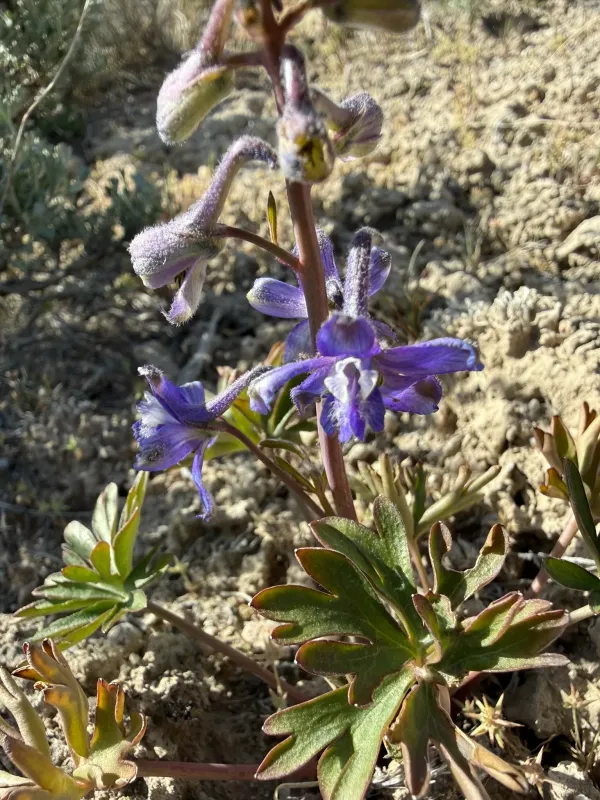
Description
Growing requirements
Anderson's larkspur (Delphinium andersonii) is a perennial herbaceous plant belonging to the Ranunculaceae family. It is indigenous to the western regions of North America, flourishing in varied landscapes ranging from mountain slopes to semi-arid deserts.
The plant exhibits a specialized adaptation to Mediterranean-like climates characterized by wet winters and dry summers. Its geographical distribution focuses primarily on the states of California, Nevada, and Oregon, where it thrives in well-drained, sandy, or gravelly soils.
Botanically, it is defined by its deep, tuberous root system and characteristic palmately lobed leaves. The flowers are typically showy, appearing in shades of blue and purple, arranged in a raceme, and serve as an important nectar source for native pollinators.
Regarding cultivation requirements, the species demands full sun exposure and minimal soil nitrogen. It does not tolerate waterlogged conditions, which can lead to rapid decay of the root crown during the dormant season.
The agricultural significance is primarily negative because the plant contains complex diterpenoid alkaloids. These compounds are highly toxic to cattle, sheep, and horses, necessitating management strategies to prevent ingestion on grazing lands.
Main diseases and pests
The primary pathological threats to Anderson's larkspur include powdery mildew, which manifests as a white fungal coating on the foliage during periods of high humidity and poor circulation.
Insect pests, such as aphids and leaf miners, frequently cause damage to the photosynthetic apparatus. In dense populations, these infestations can significantly reduce the vigor and reproductive success of the plants.
Crown rot caused by various soil-borne fungi is a common threat in habitats where drainage is compromised or where excessive soil moisture persists for extended periods.
Weed competition often outcompetes younger plants during the establishment phase, especially in disturbed soils where invasive grasses can rapidly occupy the available space.
For conservation and management purposes, monitoring for signs of wilt and necrosis is essential to maintain the health of native populations in their natural environments.