
Deeringothamnus rugelii
Deeringothamnus rugelii
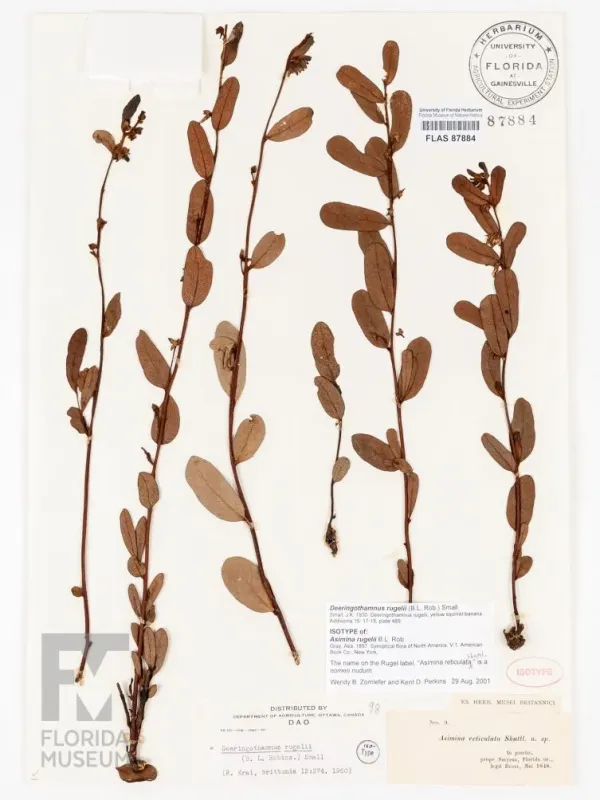
Description
Growing requirements
Deeringothamnus rugelii is a rare, low-growing shrub that belongs to the Annonaceae family. It is a highly specialized plant species known for its restricted geographic distribution and unique ecological requirements.
The native range of this species is confined to specific regions within Florida, USA. It primarily thrives in well-drained, sandy soils often associated with pine flatwoods and wet prairie ecosystems.
Botanically, the plant is recognized for its woody structure and slow growth rate. It is adapted to subtropical climates where it requires consistent sunlight and precise soil drainage to survive.
This species does not have any commercial agricultural applications. It is strictly protected as a rare botanical specimen, and its cultivation is limited to specialized botanical gardens and research facilities.
Effective conservation and management require mimicking the plant's natural soil chemistry and exposure levels. It is highly intolerant of soil compaction and requires stable environmental conditions to flourish.
Main diseases and pests
The primary threat to Deeringothamnus rugelii is habitat loss due to residential and commercial land development. As its range is extremely limited, any land clearing poses a significant risk to the population.
The suppression of natural fire regimes significantly alters the habitat, allowing woody shrubs to encroach upon the open areas the species requires, which leads to habitat degradation.
Reduced genetic diversity within fragmented populations poses a long-term risk. The plant's ability to reproduce and adapt to changing environmental conditions is hindered by its limited population size.
Invasive plant species compete aggressively for nutrients and space. Without active management to clear out competing vegetation, the species is frequently outcompeted and displaced from its niches.
Because the species is highly sensitive, any disturbance to the natural water table or soil structure can be fatal. Conservation efforts currently focus on monitoring these remaining pockets of biodiversity.