
Daveaua anthemoides
Daveaua anthemoides
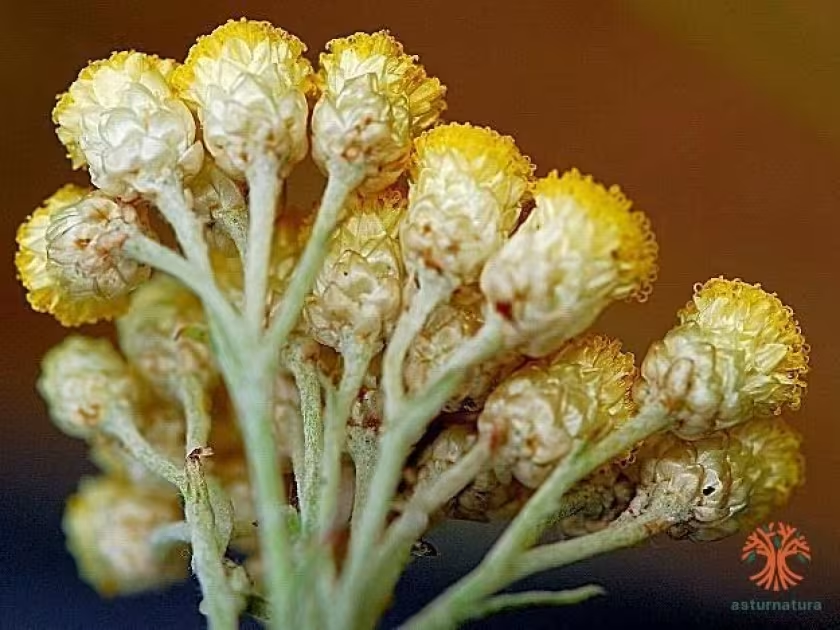
Description
Sowing dates
Daveaua anthemoides is a specialized species within the Asteraceae family known for its resilience and ability to thrive in specific environmental conditions. Sowing typically occurs in early spring, once the soil has warmed up enough to facilitate uniform germination.
Given the small size of the seeds, meticulous seedbed preparation is essential. The soil should be finely crumbled to ensure proper seed-to-soil contact. Sowing is usually done in rows, which allows for mechanical weeding and better management of plant spacing.
The optimal sowing depth is shallow, ranging from 1 to 2 centimeters. Deep planting can prevent seedlings from reaching the surface, while too shallow planting poses a risk of desiccation if the topsoil layer dries out quickly.
In regions susceptible to late frost, farmers often delay planting until temperatures stabilize. This practice minimizes the risk of cold damage and supports a more consistent emergence rate across the field.
Determining the correct seeding rate is critical to avoid overcrowding. Proper spacing ensures that each plant has sufficient access to nutrients and light, which significantly impacts the final biomass production and plant health.
Growing requirements
This crop prefers well-drained, sandy-loam or light-textured soils. It possesses a high tolerance for drought, making it an excellent candidate for cultivation in arid or semi-arid climates where water efficiency is paramount.
The ideal soil pH for Daveaua anthemoides is neutral to slightly alkaline. It does not perform well in heavy, waterlogged soils, which can induce root rot and stifle overall growth. Soil structure improvement may be required for heavier textures.
Light availability is a major factor in the successful cultivation of this species. It is a light-demanding plant, and any degree of shading will likely result in etiolated stems and a significant drop in productivity.
Nutrient requirements are relatively modest compared to intensive cash crops. A balanced application of phosphorus and potassium helps to improve stalk strength, while nitrogen should be managed carefully to avoid excessive vegetative growth.
Effective weed management is essential during the early stages of plant development. Because Daveaua anthemoides grows slowly at first, it is highly sensitive to competition from invasive weeds for water, nutrients, and sunlight.
Yield
The yield of Daveaua anthemoides depends on environmental stability and the precision of agronomic practices. Under favorable conditions, the crop produces a reliable quantity of green mass, suitable for various industrial or agricultural applications.
For seed production, the goal is to achieve high germination energy and purity. Harvesting at the peak of seed maturity ensures that the collected material maintains its viability and meets commercial standards for future sowing.
Multiple harvests of green mass are possible within a single growing season if moisture levels are kept consistent. Selective cutting techniques encourage secondary branching and regrowth, which effectively increases the total annual yield.
While the plant is hardy, the strategic use of growth stimulants or appropriate irrigation during prolonged heat spells can significantly boost output. Even without intensive inputs, the crop is noted for its consistency.
Post-harvest processing, including cleaning and moisture control, is vital to maintaining yield quality. Properly managed storage conditions prevent microbial degradation and preserve the integrity of the collected material.
Main diseases and pests
The primary threats to Daveaua anthemoides are fungal pathogens associated with high humidity, such as powdery mildew and gray mold. These diseases often emerge in stagnant air conditions or water-saturated fields.
Common pests like aphids and spider mites can attack the plants, causing localized damage. Early detection through field monitoring is essential to prevent outbreaks that could compromise the health of the entire crop.
Weeds pose a significant threat, especially when they grow faster than the crop and overshadow it. Mechanical cultivation or manual weeding in the early phases is the most effective approach to reduce this competitive pressure.
Crop rotation is a fundamental preventive measure. Planting Daveaua anthemoides after other Asteraceae species increases the risk of soil-borne diseases, so a varied rotation schedule is highly recommended by agronomists.
Biological control agents are often preferred over broad-spectrum pesticides to manage pest populations. This approach helps maintain a healthy ecosystem and minimizes chemical residues on the final product.
Harvesting
The harvesting of the green mass should ideally coincide with the beginning of the flowering phase. This is when the concentration of key biochemical components is at its peak, ensuring maximum utility for the intended harvest purpose.
Technological requirements for harvesting involve precise machinery calibration to minimize loss. Harvesting during dry, sunny weather is preferred to prevent spoilage and facilitate the post-harvest drying process.
Rapid drying in well-ventilated, shaded environments is critical. Sun exposure should be limited to prevent the loss of volatile oils and other sensitive compounds that determine the product's value.
Sorting and cleaning are integral parts of the harvest procedure. Removing debris and impurities ensures that the high-quality product is ready for immediate processing or storage without a significant decrease in shelf life.
Success in harvesting is defined by the balance between mechanical efficiency and product quality. Careful handling ensures that the crop maintains its aesthetic and structural properties through the supply chain.