
Swamp cyrilla
Cyrilla racemiflora
Description
Growing requirements
Swamp cyrilla (Cyrilla racemiflora), also known as leatherwood, is the only member of the Cyrillaceae family. This woody plant is native to the southeastern United States, Mexico, and the Caribbean, where it typically thrives in swamps, along streams, and in wet bottomland forests.
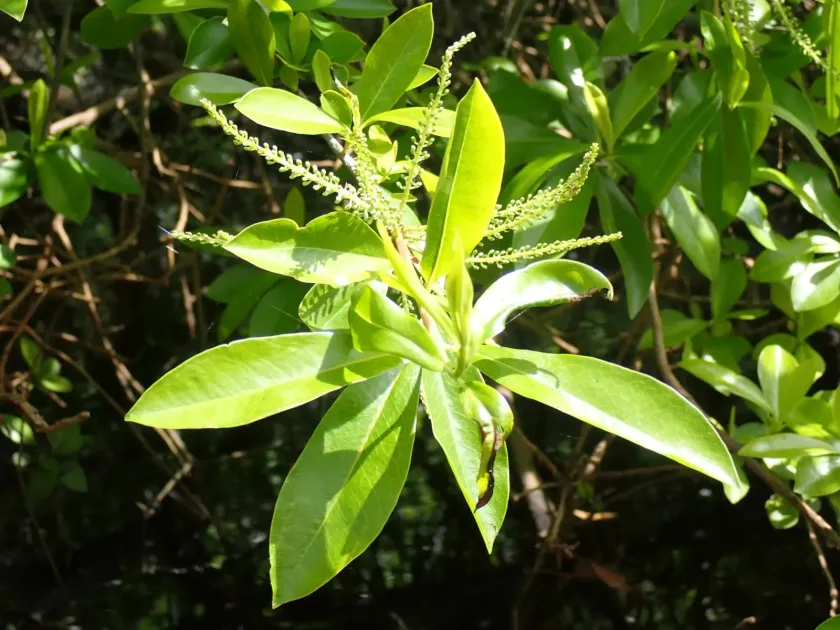
Botanically, it is a semi-evergreen to evergreen shrub or small tree that can reach heights of up to 9 meters. It is recognized by its smooth, peeling bark and clusters of small white flowers that form long, drooping racemes, providing a spectacular display during the blooming season.
Cultivation requirements are strict regarding soil moisture and acidity. The plant prefers saturated, acidic soils and is highly tolerant of wet feet, making it an excellent choice for riparian restoration or rain gardens where water drainage is slow.
The climate must be mild to support its evergreen habit, as hard frosts can damage the foliage and stems. It grows best in regions with high humidity and consistent rainfall, mirroring its natural boggy habitat.
In terms of хозяйственное использование, this plant is highly valued by beekeepers. It is a premier nectar source, producing a characteristic light-colored honey that is highly prized for its mild, pleasing flavor profile.
Main diseases and pests
Swamp cyrilla is generally resilient and rarely suffers from major pest infestations or severe disease outbreaks. Its natural adaptation to wet environments makes it more robust than many terrestrial ornamental shrubs.
The most common issues encountered by growers are related to improper soil pH levels. If the soil becomes alkaline, the plant will struggle to absorb necessary nutrients, leading to chlorosis, stunted growth, and a significant reduction in flower production.