
Cretan houndstongue
Cynoglossum creticum
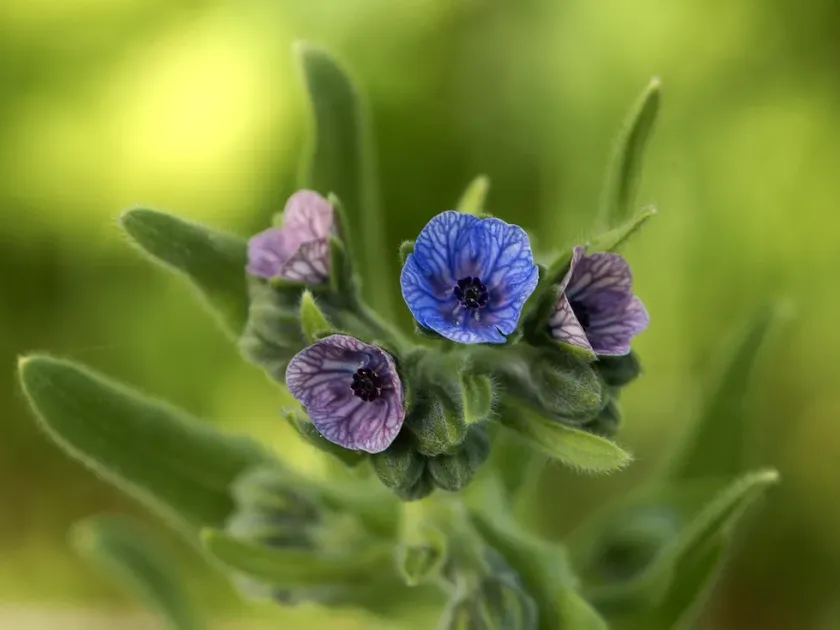
Description
Sowing dates
Cretan houndstongue is a herbaceous plant belonging to the Boraginaceae family. It is typically sown in early spring or autumn, depending on the climatic zone, to ensure the seeds benefit from natural moisture and mild temperature transitions.
The seeds should be planted in well-prepared, loose soil at a depth of approximately 2–3 centimeters. Proper seedbed preparation is vital to ensure uniform germination and to allow the plant to establish its initial root system before the dry season.
Spacing between rows should be maintained at 40 to 50 centimeters. This distance provides enough space for the plant to develop a large rosette of leaves, which is the primary vegetative stage before the emergence of the flowering stem.
Early-stage management is crucial; thin the seedlings if they are too dense, as overcrowding can lead to poor plant vigor and increased susceptibility to diseases. Regular monitoring ensures that the stand remains uniform.
While the plant is hardy, early establishment requires steady moisture. Once the plants have developed a deep root system, they become quite capable of withstanding varying environmental conditions typical for Mediterranean-originated species.
Growing requirements
Cretan houndstongue thrives in well-drained, sandy-loam or loamy soils. It requires an environment with neutral to slightly alkaline pH levels. Heavy, waterlogged soils must be avoided as they significantly increase the risk of root rot.
The crop prefers full sunlight exposure. While it is adaptable to partial shade, optimal growth and secondary metabolite accumulation occur in open, sunny locations where plants receive maximum solar radiation throughout the day.
The species is notably drought-tolerant, making it suitable for regions where water resources might be limited. However, supplementary irrigation during the flowering stage can significantly boost seed production and overall biomass yield.
Soil nutrient levels should be balanced. A pre-planting application of organic matter or a balanced NPK fertilizer supports healthy development, while excessive nitrogen should be avoided to prevent weak, succulent growth that is vulnerable to pests.
Proper field management includes regular weeding, especially during the first few months, to minimize competition for light, water, and nutrients, ensuring the crop remains healthy and productive.
Main diseases and pests
Powdery mildew is one of the most common fungal threats to this crop, especially in humid conditions with poor air circulation. To mitigate this risk, ensure adequate plant spacing and manage field humidity levels.
Pests such as aphids and various leaf-feeding insects can cause damage during the active growing season. Integrated pest management, including the use of biological control agents, is recommended to protect the quality of the crop.
Root rot, driven by stagnant water in the soil, poses a severe threat to stand health. Implementing proper drainage systems and avoiding excessive irrigation are the primary methods for preventing such soil-borne pathogens.
The presence of aggressive weed species can suppress the crop during its early development. Manual or mechanical weeding between rows is essential to maintain a clear path for the crop to flourish without interference.
Maintaining a clean field environment by removing dead plant matter reduces the overwintering potential of various pests and fungal spores, providing a healthier foundation for the next growing cycle.