
Cymbolaena griffithii
Cymbolaena griffithii
Description
Growing requirements
Cymbolaena griffithii is a distinct plant species belonging to the Asteraceae family. As a monotypic genus, it holds a specific place in plant taxonomy, known for its adaptation to harsh, arid environments within its native range in Central and South Asia.
The native distribution of this species spans regions of Afghanistan, Iran, and surrounding arid landscapes. The plant has evolved to thrive on stony slopes and sandy substrates, where nutrients are sparse and temperatures fluctuate significantly throughout the year.
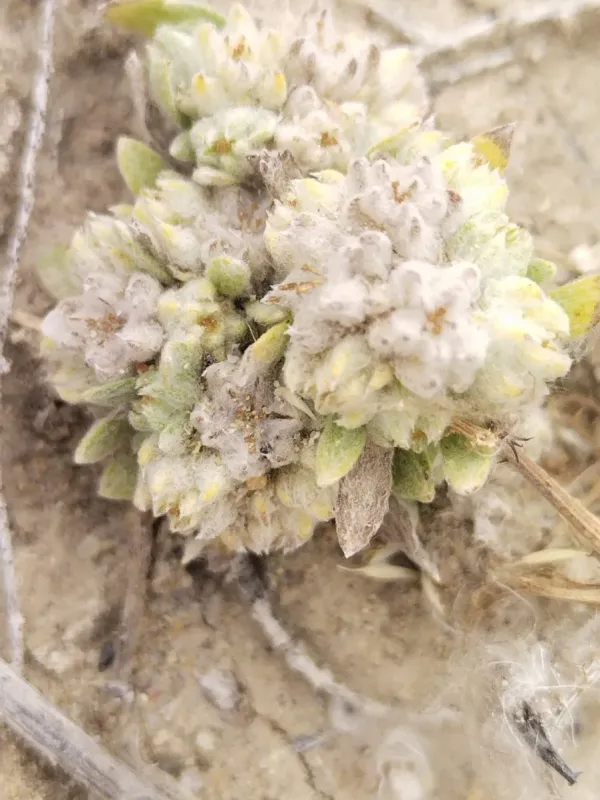
Morphologically, the plant is characterized by its compact size and dense, woolly indumentum covering the foliage. This structural adaptation acts as a critical mechanism to reduce transpiration rates and protect the plant from high solar radiation in its natural desert habitat.
Cultivation requirements for this species are strict and involve high light intensity and low humidity. It demands a substrate with excellent drainage properties, as the root system is highly sensitive to moisture accumulation, which can lead to rapid fungal decay.
Regarding its utility, the species is primarily studied by botanists for its resilience mechanisms. While it is not a commodity crop, it serves as an essential subject for understanding plant survival strategies in desert ecosystems, contributing to the broader field of agrobotany.