
Quince
Cydonia
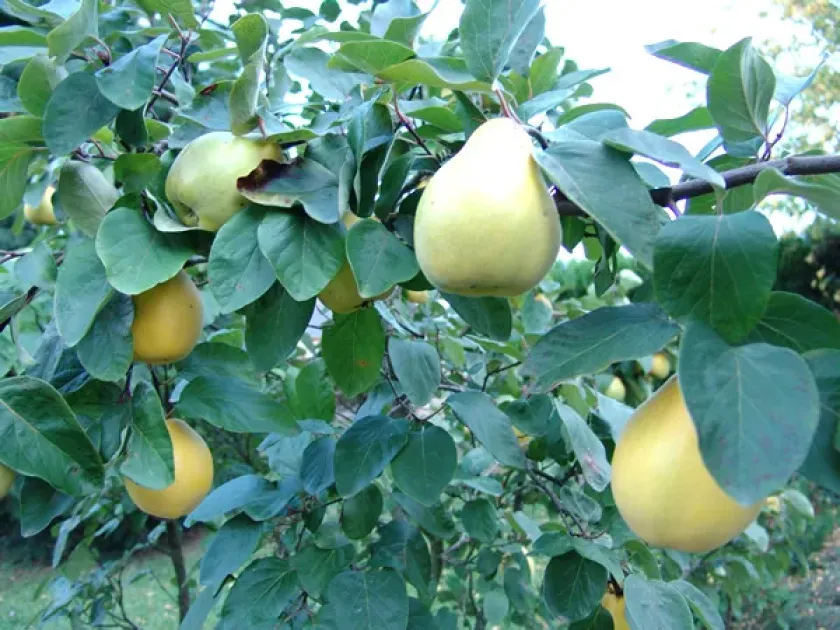
Description
Growing requirements
Quince (Cydonia oblonga) is a deciduous tree belonging to the Rosaceae family. It is the sole member of the genus Cydonia and is highly valued for its large, pear-shaped or apple-shaped fruits, which are packed with vitamins, pectin, and antioxidants.
The tree thrives in Mediterranean-type climates, requiring long, warm summers to reach full maturity. While it is relatively drought-tolerant once established, supplemental irrigation is crucial during fruit development to ensure optimal size and juice content.
Quince prefers deep, well-drained loamy soils with a slightly acidic to neutral pH. It does not tolerate waterlogged conditions, which can lead to root rot. Good soil preparation, including the addition of organic matter, is recommended prior to planting.
Sunlight exposure is essential for high productivity and fruit quality. Trees should be planted in open, sunny locations protected from strong, cold winds that can damage blossoms in the spring and cause fruit drop later in the season.
Economically, quince is a versatile crop. Beyond fresh consumption, it is widely used in the food industry for jellies, jams, pastes, and traditional desserts. Its unique fragrance also makes it popular for flavoring syrups and as a natural scent ingredient.
Yield
Commercial yields of quince depend on proper orchard management, tree age, and cultivar selection. Trees generally begin to bear fruit in their 3rd or 4th year, reaching full production potential between years 8 and 12.
A healthy, mature tree can produce between 50 and 100 kilograms of fruit per season. Regular pruning is necessary to maintain an open canopy, which improves light penetration and promotes the development of high-quality fruit-bearing wood.
Pollination is a vital factor for yield success. Although many cultivars are self-fertile, planting multiple varieties within the same orchard increases the rate of fruit set and enhances the overall harvest uniformity and size.
Fertilization regimes should focus on nitrogen for structural growth in young trees and potassium for fruit quality in mature trees. Mulching around the base helps retain moisture and suppress weeds, which compete for nutrients.
Thinning the fruit set in seasons of heavy production can significantly improve the quality of the remaining fruits, preventing limb breakage and ensuring that the harvest meets market size requirements.
Main diseases and pests
Monilia (brown rot) is the most significant fungal threat to quince, often causing fruits to rot on the branch. Sanitation is key; removing all mummified fruits and dead branches is essential for preventing the spread of spores.
Scab infection, caused by Venturia pirina, affects both leaves and fruit, causing discolored lesions. Implementing a preventative fungicide spray schedule during the early spring and rainy periods is critical for effective management.
The codling moth is a major insect pest that bores into the fruit, rendering it unsellable. Growers often use pheromone traps for monitoring and biological control agents to keep populations below the economic threshold.
Aphids and mites can damage new growth, leading to leaf curling and weakened tree vitality. Regular monitoring and, if necessary, the application of horticultural oils or soaps help maintain tree health without excessive chemical use.
Integrated Pest Management (IPM) practices, including the maintenance of a diverse ecosystem in the orchard and protecting natural predators, are highly recommended to ensure sustainable production and minimize synthetic pesticide reliance.
Harvesting
Harvesting usually takes place in late autumn when the fruits change from a green color to a vibrant yellow. At this stage, the characteristic aromatic scent becomes stronger, signaling maturity.
Due to the thin and easily bruised skin of the quince, all fruits must be hand-picked with care. Harvesters should avoid pulling or jerking the fruits, instead using clippers to cut the stems, leaving a small portion attached to the fruit.
For storage purposes, fruits are harvested while still firm. They can be kept in a cool, well-ventilated space with a temperature range of 0°C to 5°C. Under these conditions, they can remain in good condition for several months.
Post-harvest sorting is crucial for long-term storage success. Fruits with minor bruises or surface cuts should be separated from the primary crop and used immediately for processing to prevent decay from spreading to healthy fruits.
Proper stacking in crates with adequate airflow is essential during storage. Periodic inspection of the stored crop allows the removal of any fruits that begin to soften or decay prematurely, ensuring the longevity of the remaining inventory.