
Cyanophora paradoxa
Cyanophora paradoxa
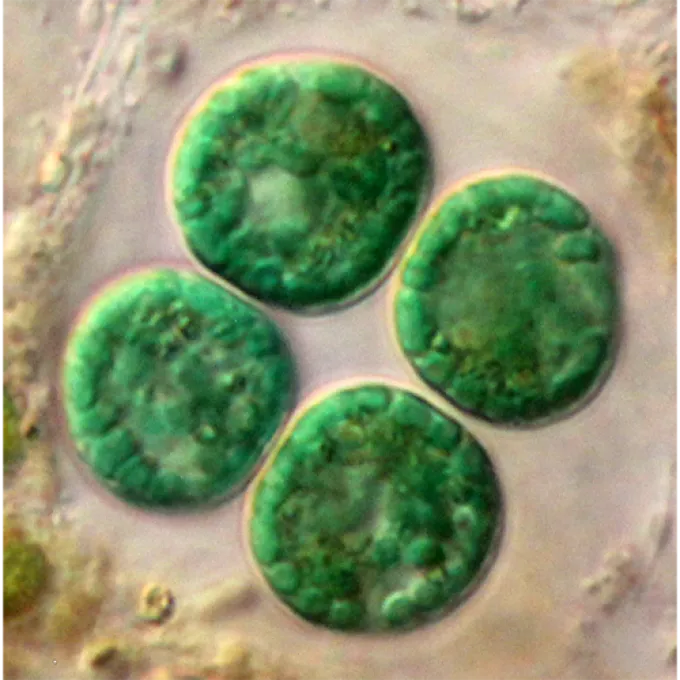
Description
Growing requirements
Cyanophora paradoxa is a species of unicellular freshwater algae belonging to the family Cyanophoraceae. It is globally recognized in the scientific community as a vital model organism for investigating the evolutionary history of plant cells and the symbiotic origins of organelles.
The culture thrives in controlled aquatic environments. Unlike traditional agricultural crops, it does not require soil or field management. Instead, cultivation involves the use of specialized mineral media that simulate natural freshwater conditions to ensure the health of the cultures.
Requirements for optimal growth include a constant ambient temperature of approximately 20°C and a neutral pH balance. The light cycle must be carefully regulated to avoid stress, as the organism is highly sensitive to rapid fluctuations in light intensity and chemical composition of the water.
The botanical and biological significance of Cyanophora paradoxa lies in its cyanelles. These are photosynthetic organelles that retain a peptidoglycan layer, acting as a living record of the ancient endosymbiotic event that led to the evolution of chloroplasts in modern plants.
Its primary application is in fundamental scientific research. Biotechnology and evolutionary biology labs utilize this species to study organelle genome reduction, metabolic exchange mechanisms between host cells and endosymbionts, and the basic principles of autotrophic energy conversion.