
Cyanidioschyzon merolae
Cyanidioschyzon merolae
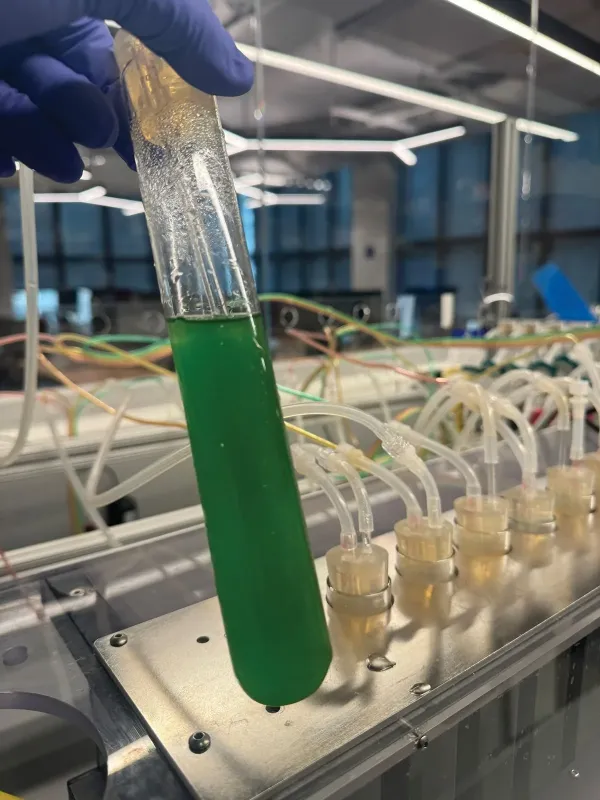
Description
Growing requirements
Cyanidioschyzon merolae is a primitive single-celled red alga belonging to the Cyanidiaceae family. This organism is an extremophile, perfectly adapted to living in extremely harsh environments.
In its natural habitat, such as hot acidic springs, the algae thrives at extremely low pH values (ranging from 0.5 to 3.0). This unique trait makes it an ideal subject for industrial biosynthesis.
Successful cultivation requires a medium with a high sulfur concentration and a temperature range of 35 to 55 degrees Celsius. Constant access to carbon dioxide is essential for active photosynthesis.
This crop does not require soil as it is an obligate aquatic organism. The cultivation technology relies entirely on bioreactors with precise control over acidity and thermal regimes.
On an industrial scale, the culture is grown in closed systems, which allows for the elimination of external climatic influences and ensures consistent cellular metabolism.
Yield
The yield of this culture is assessed by the biomass accumulation rate within bioreactor units. Due to the lack of a cell wall, C. merolae exhibits high membrane permeability.
The resulting biomass is used as a feedstock for obtaining valuable metabolites. These include specific pigments, phycocyanins, and various bioactive compounds for the nutraceutical industry.
Production efficiency is directly dependent on the level of light intensity, as robust photosynthesis acts as the primary driver for cellular population growth.
Under optimal parameters, the culture demonstrates rapid cell division rates. An accelerated growth cycle allows for multiple harvest cycles per month.
Current economic utilization is primarily focused on scientific research and biotech industries targeting high-value products derived from algal extracts.
Main diseases and pests
The primary threat to the culture is a change in the chemical composition of the medium, particularly a rapid shift of pH towards neutral or alkaline levels, which leads to immediate cell death.
Viral infection of microbiological cultures presents a significant risk. Maintaining strict sterility in laboratory and production conditions is necessary to prevent contamination by foreign microorganisms.
A deficiency in essential mineral elements, particularly nitrogen and sulfur compounds, slows metabolism and reduces the yield of targeted compounds, mimicking a crop disease state.
Overheating beyond critical temperature thresholds leads to the denaturation of proteins involved in the photosynthetic apparatus, requiring reliable backup cooling systems in production facilities.
Competition from other algal species in non-sterile environments is virtually non-existent due to the extreme acidity of the medium, which only this specialized species can withstand.