
Crucigenia
Crucigenia
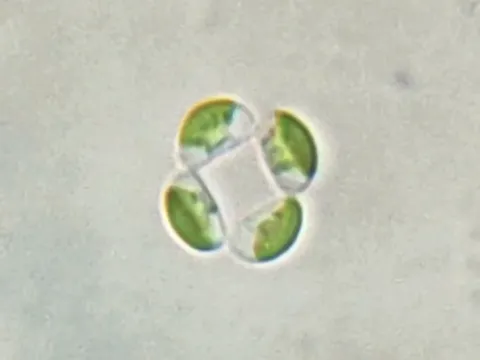
Crucigenia is a genus of green microalgae belonging to the family Scenedesmaceae. These microscopic organisms are recognized for their colonial growth structure, typically forming groups of four cells held together by a mucilaginous matrix, which is a key feature for their identification.
What the section contains
Crucigenia
To cultivate this species effectively, precise control over environmental factors is essential. The ideal temperature range for growth is between 20°C and 30°C. Maintaining this range ensures that metabolic pathways remain active and conducive to rapid cell division.
Lighting is the most significant requirement for photosynthesis in these algae. Consistent and uniform exposure to light sources within a bioreactor is crucial. Insufficient light intensity will lead to a rapid decline in biomass production and eventual culture collapse.
The growth medium must be carefully balanced with macronutrients such as nitrogen, phosphorus, and potassium, alongside vital trace elements. These inputs are necessary for the synthesis of cellular structures and the activation of biological enzymes during the growth phase.
Managing the pH level is also vital. A stable, slightly alkaline environment (pH 7.0–8.5) is preferred for most industrial applications. Proper pH management prevents the precipitation of salts, which would otherwise deprive the algae of essential nutrients.
The yield of Crucigenia is measured by the concentration of dry biomass achieved within a defined period. In professional settings, industrial photo-bioreactors are employed to maximize these results and ensure product consistency.
Carbon dioxide supply serves as a primary growth driver. By enriching the culture medium with CO2, agronomists can significantly enhance the rate of carbon fixation, which in turn leads to a proportional increase in total biomass output.
Optimal cell density management allows for sustained production. By harvesting a portion of the culture at regular intervals, the population is kept in a constant state of exponential growth, avoiding the stagnation associated with overcrowding.
Adequate agitation is required to keep cells suspended. This ensures that no individual cluster is shaded by others, which is vital for maintaining the health of the entire population and ensuring a uniform harvest quality.
The processed biomass is utilized primarily as a nutrient-dense additive in livestock feed and aquaculture. Its high protein content makes it a valuable asset in sustainable agricultural production models.
Biological contamination remains the primary threat to Crucigenia cultures. Invasive algal species or protozoans can quickly compete for nutrients, potentially overwhelming the primary crop if strict biosecurity measures are not implemented.
Pathogenic viral or bacterial outbreaks can cause sudden and devastating losses in biomass. Maintaining a sterile or highly controlled environment is the only effective defense against these biological threats during large-scale production.
Light stress, specifically photoinhibition caused by excessive intensity, can lead to permanent damage of the photosynthetic apparatus. If the intensity is not properly moderated, cells will experience stress that prevents them from recovering their reproductive capacity.
Chemical imbalances caused by the buildup of waste products can poison the culture. Effective filtration systems and scheduled medium turnover are required to mitigate the accumulation of these toxins and preserve the viability of the algal population.
- Invasive contamination by other microalgae.
- Viral infections causing culture collapse.
- Photoinhibition from excessive light.
- Toxicity from accumulated metabolic waste.
- Nutrient imbalance affecting growth rate.