
Sea crosswort
Crucianella maritima
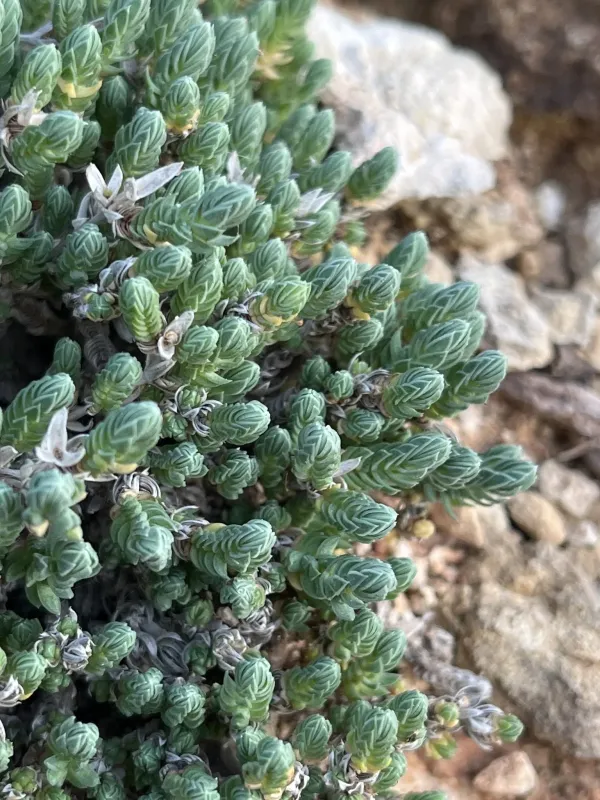
Description
Growing requirements
Sea crosswort (Crucianella maritima) is a perennial herbaceous plant belonging to the Rubiaceae family. It is a quintessential psammophyte, native to the sandy coastal dunes of the Mediterranean region, where it plays a critical role in stabilizing shifting sands.
The botanical structure of the plant features a robust, deep-reaching root system capable of binding sandy substrates, preventing wind-driven erosion. Its foliage is highly adapted to withstand salt spray and intense UV radiation, which are characteristic of its natural habitat.
When cultivating this species, site selection is paramount. The plant requires well-drained, porous, sandy soil with minimal nutrient content. It is extremely intolerant of heavy, clay-based soils or waterlogged conditions, which can rapidly lead to root decay.
The agricultural management of Crucianella maritima is minimal, as it is evolved to thrive in low-fertility soils. Irrigation should be used sparingly during the establishment phase, ensuring that the substrate remains aerated and dry between watering sessions to mimic natural dune hydrology.
From an agronomic and environmental perspective, this plant is primarily utilized for ecological restoration projects. Its ability to create ground cover in harsh, saline environments makes it an excellent choice for coastal landscape engineering and dune stabilization programs.
Main diseases and pests
The main threats to the plant include physical disturbance of the dune environment and excessive human foot traffic, which leads to soil compaction and destruction of the sensitive root network. Such damage weakens the plant's natural resistance.
Phytosanitary risks are generally low, but in greenhouse environments with poor ventilation, the plant can become susceptible to various fungal pathogens, specifically those causing root rot. In the field, occasional infestations by sap-sucking insects or mites can occur during prolonged periods of drought.