
Garden croton
Codiaeum variegatum (L.) A. Juss.
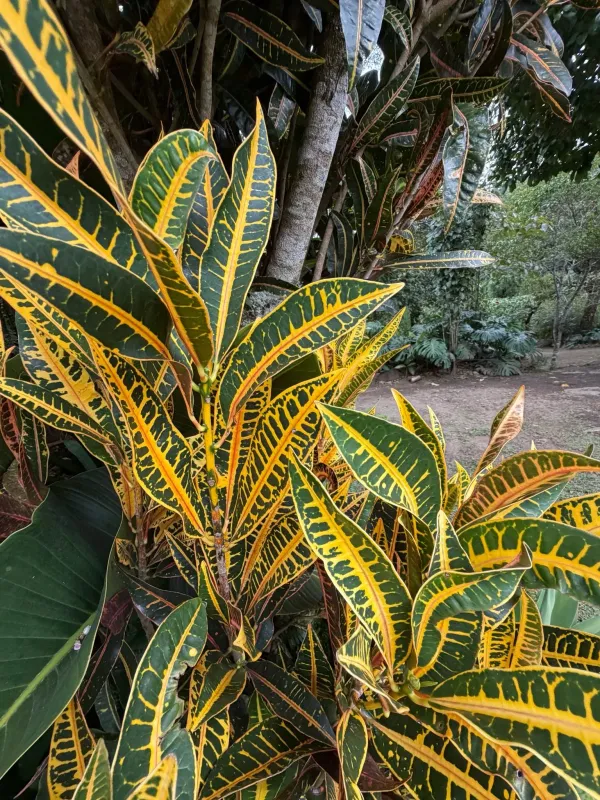
Description
Growing requirements
The Garden croton (Codiaeum variegatum) belongs to the Euphorbiaceae family. This evergreen shrub is native to the tropical regions of Southeast Asia and Oceania, where it thrives in humid and warm rainforest environments.
This crop demands consistent temperatures, ideally between 22 and 26 degrees Celsius. Exposure to cold drafts or rapid temperature drops will often result in premature leaf drop, as the plant is highly sensitive to environmental stress.
Light intensity is the most critical factor for maintaining the plant's aesthetic value. Without bright, indirect sunlight, the foliage loses its characteristic multicolored variegation, turning solid green and losing its market appeal.
The substrate must be light, nutrient-rich, and well-draining. A mix consisting of peat, leaf mold, and perlite or coarse sand is recommended to ensure that the root system has adequate airflow and drainage to prevent saturation.
High relative humidity is essential for the healthy development of this crop. Regular misting or the use of humidifiers is necessary, particularly in indoor environments, to keep humidity levels consistently above 60 percent.
Main diseases and pests
Spider mites are the most common pest, thriving in the dry air conditions that often occur indoors. These pests feed on the cell sap, causing fine stippling on the leaves and eventually leading to yellowing and desiccation.
Root rot, caused by fungal pathogens such as Pythium, is a major threat linked to poor drainage or overwatering. Once established, this condition is difficult to reverse, often requiring drastic pruning of the root mass.
Scale insects and mealybugs can also infest the stems and leaf axils. Physical removal using an alcohol-soaked swab, followed by the application of systemic horticultural oil, is often the most effective method for control.
Fungal leaf spots can appear if the foliage remains wet for extended periods in low-light conditions. Improving air circulation around the plants is a key cultural practice to prevent these fungal outbreaks from spreading.
Gardeners must exercise caution as the milky sap of the plant is toxic and can cause skin irritation or allergic reactions. Protective gloves are essential whenever pruning or repotting the plant to ensure safety.