
California rockflower
Crossosoma californicum
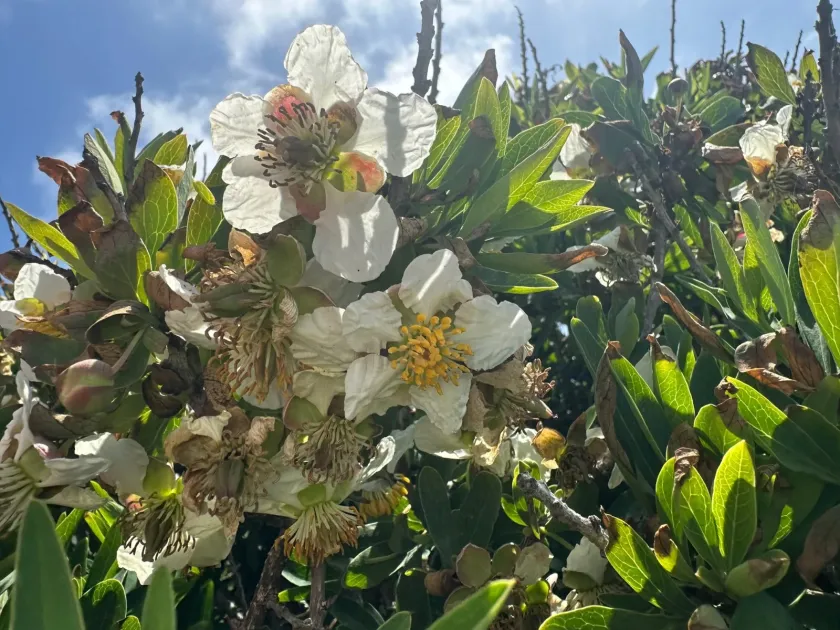
Description
Growing requirements
Crossosoma californicum, commonly known as the California rockflower, is a woody shrub belonging to the Crossosomataceae family. It is native to the Channel Islands of California and islands off the coast of Baja California, thriving in arid, exposed environments.
Botanically, the plant is characterized by its stiff, glaucous leaves and showy white to pale pink flowers that bloom in the spring. As a member of the Crossosomataceae, it exhibits distinct evolutionary traits well-adapted to surviving on rocky, precipitous terrain.
Environmental requirements for this crop focus on high light exposure and extremely well-drained, porous soil. It is a classic drought-tolerant species that excels in xeriscaping, requiring minimal irrigation once the root system is established.
Cultivation practices should mimic its natural habitat. Avoid planting in areas with high humidity or poor soil drainage, as the species is highly susceptible to root decay if kept in constantly moist conditions for extended periods.
Host use of this plant is primarily focused on ornamental horticulture and the restoration of dryland ecosystems. It provides excellent cover for local fauna and serves as a nectar source for pollinators in its native range.
Main diseases and pests
The primary threats to this species include fungal infections associated with root rot. In horticultural settings, pests like spider mites may occur if the plant is kept under environmental stress, requiring integrated pest management strategies.