
Crithopsis delileana
Crithopsis delileana
Description
Sowing dates
The timing of sowing for Crithopsis delileana is strictly dictated by the Mediterranean climate patterns. Sowing is usually performed in late autumn, ensuring that seeds are exposed to cool temperatures and sufficient moisture from early seasonal rains to trigger germination.
When sowing in managed field conditions, it is crucial to place the seeds at a shallow depth of approximately 1.5 to 2.5 centimeters. Deeper sowing often results in poor emergence, as the energy reserves in the seed are insufficient for the seedling to penetrate thick soil layers.
Seedbed preparation should focus on minimizing soil disturbance to retain existing moisture. A light harrowing technique is generally preferred over deep plowing, as this maintains the soil structure and prevents the rapid evaporation of water from deeper horizons.
The seeding rate should be optimized to provide ground cover sufficient to protect the topsoil from wind erosion. Since the plant is inherently capable of self-seeding, managed stands can often be maintained by simply allowing a portion of the crop to reach full physiological maturity.
Post-sowing maintenance is typically minimal. The crop establishes itself quickly and generally does not require intensive weed control, as its growth habit allows it to outcompete ephemeral weeds in its native environmental niche during the cooler months of the year.
Growing requirements
Crithopsis delileana is a notable annual grass belonging to the Poaceae family. This species is primarily recognized for its natural adaptation to arid and semi-arid environments, where survival depends on the ability to complete a life cycle before the onset of extreme summer droughts.
The origin of this plant is centered in the Mediterranean basin and Western Asia. It is frequently found in rocky or sandy habitats where soil moisture is seasonally limited. Its resilience makes it an object of interest for researchers working on desertification control and land reclamation.
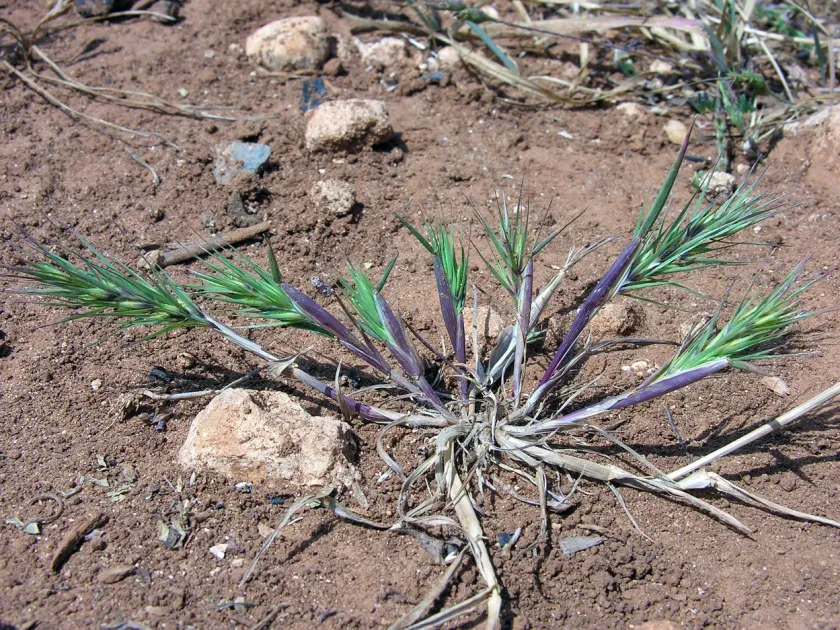
Botanically, Crithopsis delileana is characterized by a fibrous root system and slender culms that reach maturity rapidly. Its leaves are narrow, helping to reduce transpiration rates, while the inflorescence is typically a spike that produces a high number of small, wind-dispersed seeds.
Regarding soil requirements, the species thrives in well-drained, porous soils such as sandy loams. It is known to tolerate moderate soil salinity, which allows it to colonize saline patches where many other grass species would fail to germinate or survive.
In terms of хозяйственное использование, this plant is primarily utilized as a minor grazing component in pastoral systems. Although it does not produce high total yields of biomass, its nutritional value during the early spring season is beneficial for local livestock management.