
Calabash tree
Crescentia cujete L.
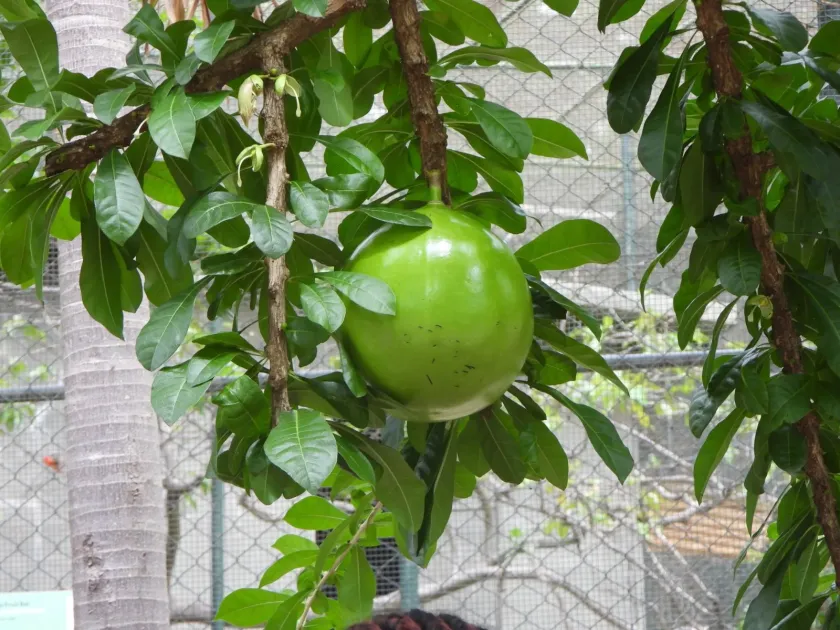
Description
Sowing dates
Propagation of the calabash tree is primarily achieved through seeds or cuttings within greenhouse conditions. Seeds are sown in a well-drained substrate rich in organic matter, maintaining a stable temperature between 25 and 28 degrees Celsius.
Seedlings emerge within three to four weeks, provided that high air humidity is maintained. It is crucial to avoid waterlogging the soil during the early stages to prevent the development of root rot, a common fungal issue in young saplings.
For industrial or ornamental cultivation, cuttings are taken from semi-hardwood stems at the beginning of the growing season. This vegetative propagation method ensures the preservation of the mother plant's specific traits, which is vital for producing gourd shapes of consistent quality.
Transplanting young trees to their permanent location is performed once the saplings reach a height of 40 to 50 centimeters. The plant is sensitive to root disturbance, so using a containerized cultivation method followed by careful transplanting is highly recommended.
While natural regeneration in the wild occurs through animal seed dispersal, controlled sowing in agricultural settings is the preferred method for ensuring uniform growth and achieving consistent plantation density.
Growing requirements
The calabash tree, a member of the Bignoniaceae family, is a distinct tropical species with strict temperature requirements. It cannot tolerate frost, making cultivation possible only in climate zones that remain free of freezing temperatures throughout the year.
The optimal temperature range for the plant's growth is between 20 and 35 degrees Celsius. The tree is heliophilous and requires full sun exposure; therefore, plantations should be situated in open areas shielded from strong winds that could damage its brittle, sprawling branches.
Crescentia cujete has moderate soil requirements, preferring deep, fertile loams with excellent drainage. The plant is adaptable to various soil types, including limestone-based ones, provided that regular irrigation is maintained during the dry seasons.
Soil moisture levels must remain consistently moderate. Although the tree possesses some tolerance for short-term drought, regular moisture is essential during the flowering and fruit-setting phases to ensure the development of high-quality gourds.
Standard agronomic practice includes the annual application of complex organic fertilizers. Fertilizing encourages vigorous foliage growth and enhances flowering intensity, which directly influences the overall volume of fruit production per season.
Yield
The economic productivity of the calabash tree is measured by the number of mature, hard-shelled fruits harvested for use as vessels or handicrafts. A mature tree can yield several dozen fruits annually depending on environmental conditions.
Yields vary significantly based on tree age, planting density, and the quality of agricultural care. Initial fruiting for seed-grown specimens usually occurs between the fifth and sixth year, whereas vegetative propagation can sometimes shorten this duration.
The fruits exhibit various shapes, such as spherical or elongated, which are inherent to specific varieties. The weight of a single fruit can range from a few hundred grams to several kilograms, heavily influenced by watering schedules and sunlight availability.
To improve output quality, farmers often practice thinning of fruit sets on the branches. This allows the tree to concentrate its resources on developing a smaller number of larger, thicker-shelled fruits suitable for utilitarian purposes.
Flowering occurs in waves throughout the year, ensuring a staggered harvest period. Harvesting is conducted selectively as individual fruits reach the necessary hardness and their skin color transitions to a lighter shade.
Main diseases and pests
The most prevalent diseases affecting the calabash tree are various types of root rot, often triggered by poor drainage or overwatering. Prevention involves strict adherence to irrigation norms and ensuring the planting site has an effective drainage system.
Foliage may become susceptible to powdery mildew in conditions of high humidity combined with poor canopy ventilation. Periodic sanitary pruning of interior branches facilitates better airflow and significantly reduces the risk of fungal spore propagation.
Among the pests, scale insects and spider mites are the most damaging, as they colonize the undersides of leaves during hot, dry periods. Control is managed through the application of systemic insecticides and the integration of biological control agents.
Young shoots are frequently attacked by aphids, which can cause leaf deformation and stunt plant growth. Systematic canopy inspections allow for the early detection and management of pest colonies before they become widespread.
Mechanical injuries to the trunk or branches can provide entry points for pathogens, making it essential to use disinfected tools during pruning and to apply wound sealant to any exposed woody tissues.
Harvesting
Harvesting Crescentia cujete is a meticulous task, given the incredible hardness of the mature fruit shell. Ripeness is determined by tapping the shell; a mature fruit produces a distinct, resonant, hollow sound.
Fruits are cut with a small portion of the stem attached to avoid damaging the outer skin. Improper storage post-harvest can lead to rapid rot of the internal pulp, which renders the shell unusable for handicraft production.
After harvesting, the pulp is extracted through a small opening made at the top of the fruit. The inner cavity is then thoroughly rinsed and sanitized to prevent mold growth during the subsequent drying phase.
Drying the gourds takes several weeks to months in a shaded, well-ventilated area. Slow drying is the key to preventing cracks in the shell, thereby preserving its structural integrity for long-term use.
The final step involves sanding and artistic decoration of the surface. Once properly dried, the calabash shell is remarkably durable, allowing these vessels to serve their intended purposes for many decades.