
Alpine hawksbeard
Crepis alpestris
Description
Growing requirements
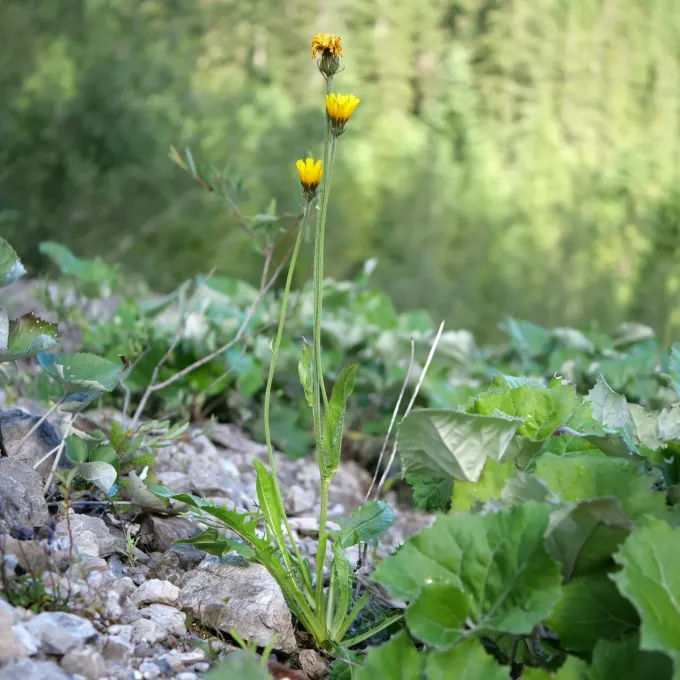
Alpine hawksbeard (Latin: Crepis alpestris) is a perennial herbaceous plant belonging to the Asteraceae family. It is a distinctive high-mountain species native to the mountainous regions of Europe, where it thrives in subalpine and alpine zones.
Botanically, the plant is characterized by a sturdy root system and a basal rosette of leaves, from which an upright, often branched stem emerges to support yellow, dandelion-like flower heads. This structure allows it to withstand strong winds and unstable mountain soil conditions.
Regarding climate requirements, Crepis alpestris is highly adapted to cool temperatures and intense solar radiation. It struggles in lowland areas with hot, humid summers, which often lead to physiological stress and reduced growth vigor compared to its natural high-altitude environment.
Soil conditions are critical for successful cultivation. The plant requires well-drained, porous soils, ideally with a slightly acidic to neutral pH. It is particularly sensitive to waterlogging, which can cause crown rot and quickly kill the plant in heavy, poorly drained clay soils.
In terms of agricultural use, Alpine hawksbeard is primarily recognized as a valuable forage component in mountain pastures. Its ability to provide nutritious grazing in harsh environments makes it an essential part of the biodiversity in sustainable high-altitude livestock farming systems.
Main diseases and pests
The primary diseases affecting Alpine hawksbeard are fungal infections, particularly powdery mildew, which can spread rapidly during damp and overcast periods, severely damaging the leaf surface area.
Root pathogens are a significant risk factor if the soil remains waterlogged for extended periods, as they destroy the plant's ability to uptake necessary nutrients and eventually lead to plant death.
In terms of insect pests, aphids are frequently observed, particularly in the floral stages, where they can cause deformation of the buds and a significant reduction in total seed production for the season.
Leaf-mining insects may occasionally cause aesthetic and minor structural damage, although they rarely threaten the survival of a healthy, well-established stand of the plant in its natural habitat.
Management strategies focus on maintaining optimal pasture health and preventing soil compaction, which are the most effective ways to minimize the impact of pests and diseases on the overall productivity of the crop.