
Wilson's hawthorn
Crataegus wilsonii
Description
Growing requirements
Wilson's hawthorn (Crataegus wilsonii) is a distinguished member of the Rosaceae family, originating from the mountain forests of China. It is highly valued in horticulture for its resilience, adaptability, and striking seasonal aesthetic displays.
The plant thrives best in locations with full sunlight to partial shade, where it can develop a dense and healthy crown. Regarding soil conditions, it prefers well-drained, fertile loams that maintain consistent moisture levels without becoming waterlogged.
As a temperate climate species, this hawthorn possesses significant winter hardiness. It is well-suited for urban environments due to its tolerance for air pollution, making it an excellent choice for parks, botanical gardens, and residential landscaping projects.
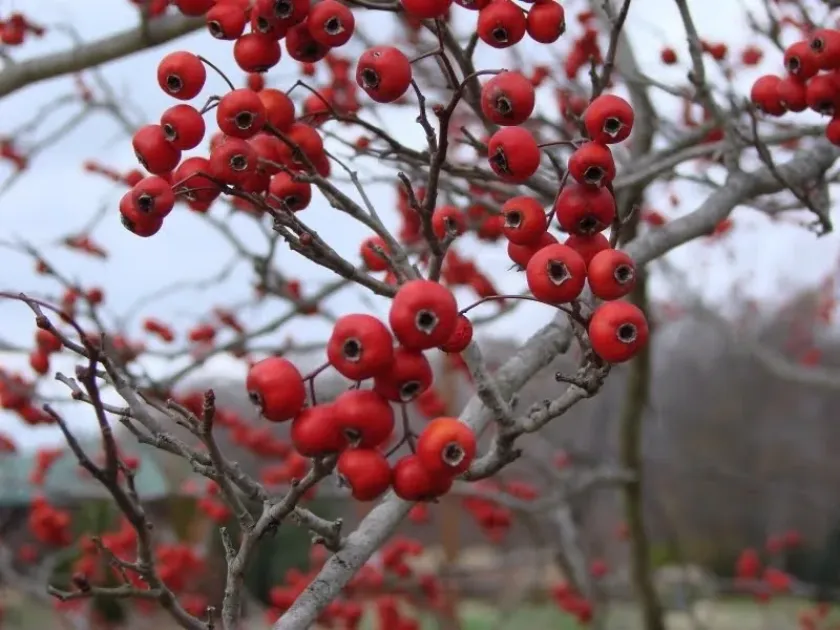
Botanically, it is characterized by its serrated leaves, clusters of small white flowers that appear in spring, and vibrant red fruits that persist into autumn. The plant's structure can vary from a small tree to a thick shrub, depending on the pruning practices applied.
Cultural practices include ensuring adequate spacing to promote airflow and performing annual pruning to maintain shape and size. Providing adequate mulch around the base helps retain soil moisture and suppresses weed growth during the establishing years.
Main diseases and pests
Wilson's hawthorn is susceptible to common Rosaceae diseases, including powdery mildew and cedar-hawthorn rust. These fungal pathogens often thrive in humid conditions where air circulation around the foliage is restricted.
Pest management should focus on common garden insects such as aphids, scale insects, and various caterpillars that feed on foliage. Early detection and targeted treatment are essential to prevent significant defoliation and stress to the plant.
Sanitation is a vital component of integrated pest and disease management. Removing fallen leaves in the autumn and pruning out infected twigs reduces the inoculum levels for the following growing season, effectively curbing the spread of pathogens.
Root rot, caused by excessive soil moisture, is another potential threat that must be mitigated through proper planting site selection. Ensuring a light, well-draining soil profile is the best preventative measure against soil-borne pathogens.
Maintaining plant vigor through balanced fertilization and correct watering practices significantly increases the natural resistance of Wilson's hawthorn to both biological pests and abiotic environmental stresses.