
Turkestan hawthorn
Crataegus turkestanica
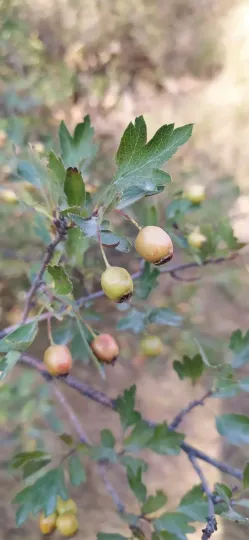
Description
Sowing dates
Propagation of Turkestan hawthorn in cultivation is most often carried out by seed or cuttings. Sowing seeds is performed in the autumn before winter, as they require long stratification, which lasts 5–6 months under natural conditions.
If seeds are sown in the spring, mandatory preparation for several months at low temperatures is required. The optimal depth for seed placement is 1–2 centimeters in light, fertile soil with good drainage.
For vegetative propagation, woody cuttings are used, which are harvested in late autumn. They are planted in nurseries or greenhouses for rooting, ensuring moderate soil moisture until a full root system develops.
Planting seedlings in their permanent place is best done in early spring or autumn when the plant is in a dormant state. The distance between bushes for hedges is 0.5–1 meter, and up to 3 meters for orchard plantings.
Young plants require regular watering during the first two years for successful rooting and the formation of skeletal branches. Once established, the plant exhibits high drought resistance.
Growing requirements
Turkestan hawthorn belongs to the Rosaceae family and is a drought-resistant plant adapted to Central Asian conditions. It prefers open, well-lit areas, as flowering and fruiting intensity decrease significantly in the shade.
The crop is undemanding regarding soil composition, although it develops best on loamy and sandy loam soils with a neutral or slightly alkaline pH. It tolerates salinity and soil compaction well, making it a promising species for landscaping.
The plant has high winter hardiness, characteristic of mountain species, and can withstand significant temperature fluctuations. However, in regions with severe winters, young seedlings are recommended to be covered to protect the root system.
Agronomic practices include periodic loosening of the root zone and removal of weeds. Fertilizing is carried out in the spring with nitrogen fertilizers and in the autumn with phosphorus-potassium complexes to improve wood winter hardiness.
Sanitary pruning is an integral part of care, performed in early spring before sap flow begins. Removing dry, diseased, and crossing branches stimulates crown formation and increases fruit yield.
Yield
The yield of Turkestan hawthorn depends on the age of the plant and the climatic conditions of the specific season. Fruiting usually begins 5–7 years after planting seedlings in their permanent place.
The average yield from one adult bush can range from 10 to 20 kilograms of fresh fruit with proper care. The intensity of fruiting largely depends on the level of insect pollination during the flowering period.
The fruits are bright red or orange-red apple-like drupes that ripen in late August or September. They contain valuable biologically active substances and are widely used in pharmacology and the food industry.
Regular pruning aimed at opening the crown allows for increased productivity and fruit size. Old plants may require rejuvenation pruning, which activates the growth of young shoots.
Harvesting is carried out manually after full ripening, when the fruits acquire a characteristic color and become soft. The harvested material can be stored in a cool place for a limited time or subjected to drying.
Main diseases and pests
Turkestan hawthorn is susceptible to typical diseases of the Rosaceae family, among which powdery mildew is the most dangerous. With severe infestation, the leaves curl and are covered with white powder, leading to plant weakening.
Another significant threat is leaf spot caused by fungal infections. To combat these diseases, copper-based fungicides are used, applied during the bud-burst phase and after flowering.
Among pests, hawthorn aphids and various sawflies are most common, damaging young foliage and inflorescences. Regular inspections of the shrub allow for the timely detection of insect colonies.
In case of mass infestation by pests, systemic or contact insecticides are used. It is important to observe waiting periods before harvesting if the fruits are intended for food purposes.
Disease prevention consists of collecting and destroying fallen leaves in autumn, as they harbor the majority of infection pathogens. Maintaining optimal crown density also reduces the risk of fungal development.
Harvesting
Harvesting Turkestan hawthorn is a labor-intensive process that requires caution, as sharp thorns are often present on the branches. Optimal timing is dry, sunny weather in late summer or early autumn.
Fruits are harvested with or without stalks, depending on the subsequent processing method. It is important to prevent fruit damage during harvest, as they lose their marketability and spoil quickly.
After harvesting, the crop must be cleaned of leaves and twigs, then sorted by removing damaged or unripe specimens. This ensures uniform drying or subsequent processing of the produce.
Fruit drying is carried out in specialized dehydrators at temperatures up to 60 degrees Celsius or in well-ventilated, shaded places. Properly dried fruits retain their healing properties for several years.
Economic use of the harvest includes making medicinal tinctures, teas, jams, and preserves. Industrial processing is also aimed at obtaining extracts, which are widely used in cardiac medications.