
Downy hawthorn
Crataegus subvillosa
Description
Growing requirements
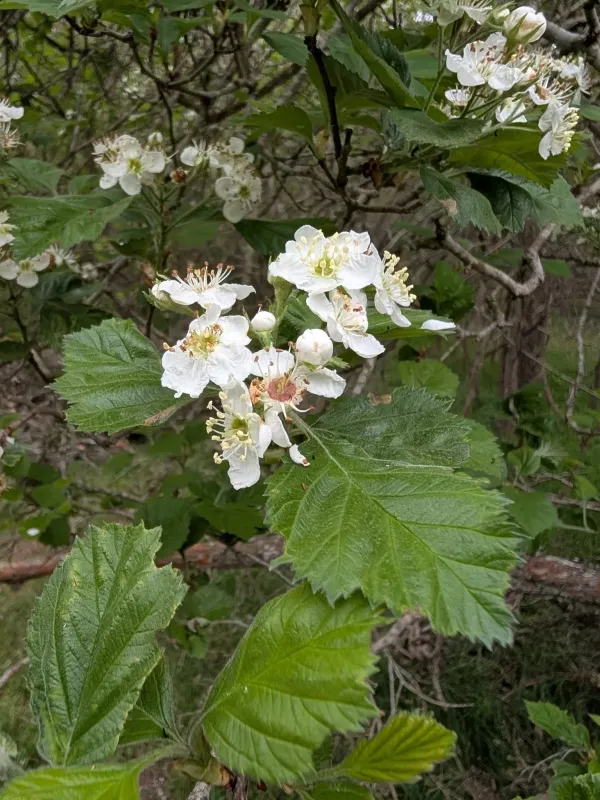
Downy hawthorn (Crataegus subvillosa) is a member of the Rosaceae family, native to North America. It is a robust shrub or small tree known for its significant winter hardiness and its ability to thrive in diverse temperate environmental conditions.
The crop prefers well-drained loamy or sandy soils with a neutral to slightly alkaline pH level. Ensuring proper drainage is crucial, as the plant is susceptible to root diseases if subjected to prolonged waterlogging in heavy soils.
As a light-demanding species, this hawthorn requires a location with full sun exposure to maintain healthy growth and maximize fruit production. Shaded areas often lead to thin foliage and weak development of the canopy.
Standard agronomic practices include consistent soil moisture management during the establishment phase, coupled with the regular application of fertilizers to provide essential nutrients for robust yearly growth.
Beyond its agricultural value for fruit production, the plant is widely utilized for its decorative properties in landscaping and its functional benefits as a windbreak in ecological agricultural schemes.
Main diseases and pests
Common fungal diseases affecting this species include powdery mildew, which manifests as a white coating on foliage, and various leaf spot pathogens that can prematurely defoliate the plant if not addressed.
Fire blight is a serious bacterial concern for this member of the Rosaceae family. It requires rigorous monitoring and the immediate removal of infected branches to prevent the spread of the pathogen.
Pests such as aphids and spider mites frequently target the young shoots and leaves. These sap-sucking insects can significantly impact the plant's vitality, leading to distorted growth and reduced harvest yields.
The hawthorn fruit moth can cause significant damage to the berries, often making them unmarketable. Proactive integrated pest management is necessary to maintain high-quality fruit yields.
Effective management involves a combination of sanitation practices, such as pruning infected wood, and the application of appropriate biological or chemical treatments during the active growing season.