
Pontic hawthorn
Crataegus pontica
Description
Growing requirements
Pontic hawthorn (Crataegus pontica) is a deciduous tree belonging to the Rosaceae family. Native to the rocky slopes and juniper forests of Central Asia and the Caucasus, it is highly adapted to arid environments, exhibiting significant drought tolerance and a strong preference for sunlight.
The crop thrives in well-drained, calcareous, or loamy soils. It is critical to provide excellent soil drainage, as the species is intolerant of waterlogging, which can cause root rot. Planting on sloped terrain or raised beds is often recommended to ensure optimal moisture regulation.
Climatic requirements involve distinct seasonal variations, with hot, dry summers conducive to fruit ripening and cold, but not extreme, winters for dormancy. It is an exceptionally hardy species capable of surviving in regions where other fruit trees might struggle due to limited irrigation.
Agronomic management focuses on structural pruning to maintain an open canopy. This practice is essential for air circulation and light penetration, which in turn reduces the risk of fungal pathogens and promotes better fruit development across the tree's architecture.
Economically, Crataegus pontica is valued for its large, flavorful fruits, which are rich in sugars and vitamins. Beyond food production, the tree serves as an important component in soil conservation projects and is a decorative addition to landscape architecture due to its resilience.
Yield
The yield of the Pontic hawthorn increases progressively as the tree reaches maturity. A well-maintained, healthy tree typically enters its peak production phase between 15 and 20 years of age, potentially producing up to 50 kg of fruit per season.
Because the fruits are among the largest in the hawthorn genus, they are highly sought after for industrial processing. They are particularly suitable for drying into high-quality nutritious snacks or for use in jams, preserves, and traditional medicinal preparations.
Main diseases and pests
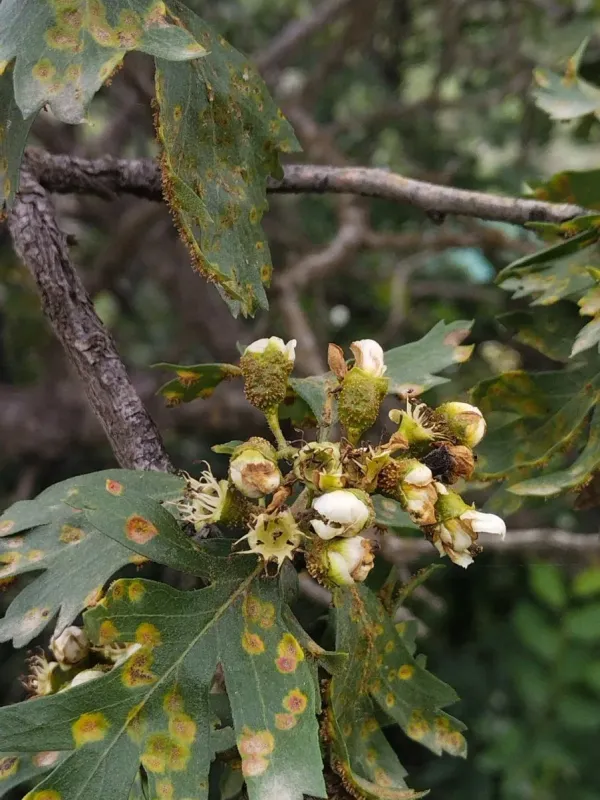
Pontic hawthorn is naturally robust and resistant to many pests that plague other pome fruits. However, in poorly ventilated or excessively damp conditions, it may become susceptible to powdery mildew or leaf rust, requiring monitoring and localized treatment.
Pest issues are generally minimal but may include occasional infestations by weevils or moths. Maintaining orchard hygiene, such as removing fallen leaves and pruning dead wood, is usually sufficient to manage these threats without relying on intensive chemical intervention.
Harvesting
The harvest period typically occurs in late autumn when fruits reach full maturity, indicated by a shift to their characteristic orange-yellow hue. It is essential to harvest when the skin is intact to ensure long-term shelf stability of the crop.
Post-harvest handling involves careful sorting to remove damaged fruits. Due to their high sugar content, the fruits should be processed shortly after harvest or transferred to drying facilities to preserve their flavor profile and nutritional density.